


VIP Lounge Uzbekistan
The Samarkand VIP Lounge blends the city’s rich cultural and scientific heritage with a contemporary architectural language. Inspired by the iconic Ulugbek Observatory, the design reinterprets traditional forms through modern spatial sensibilities to create a timeless and immersive experience for travelers.

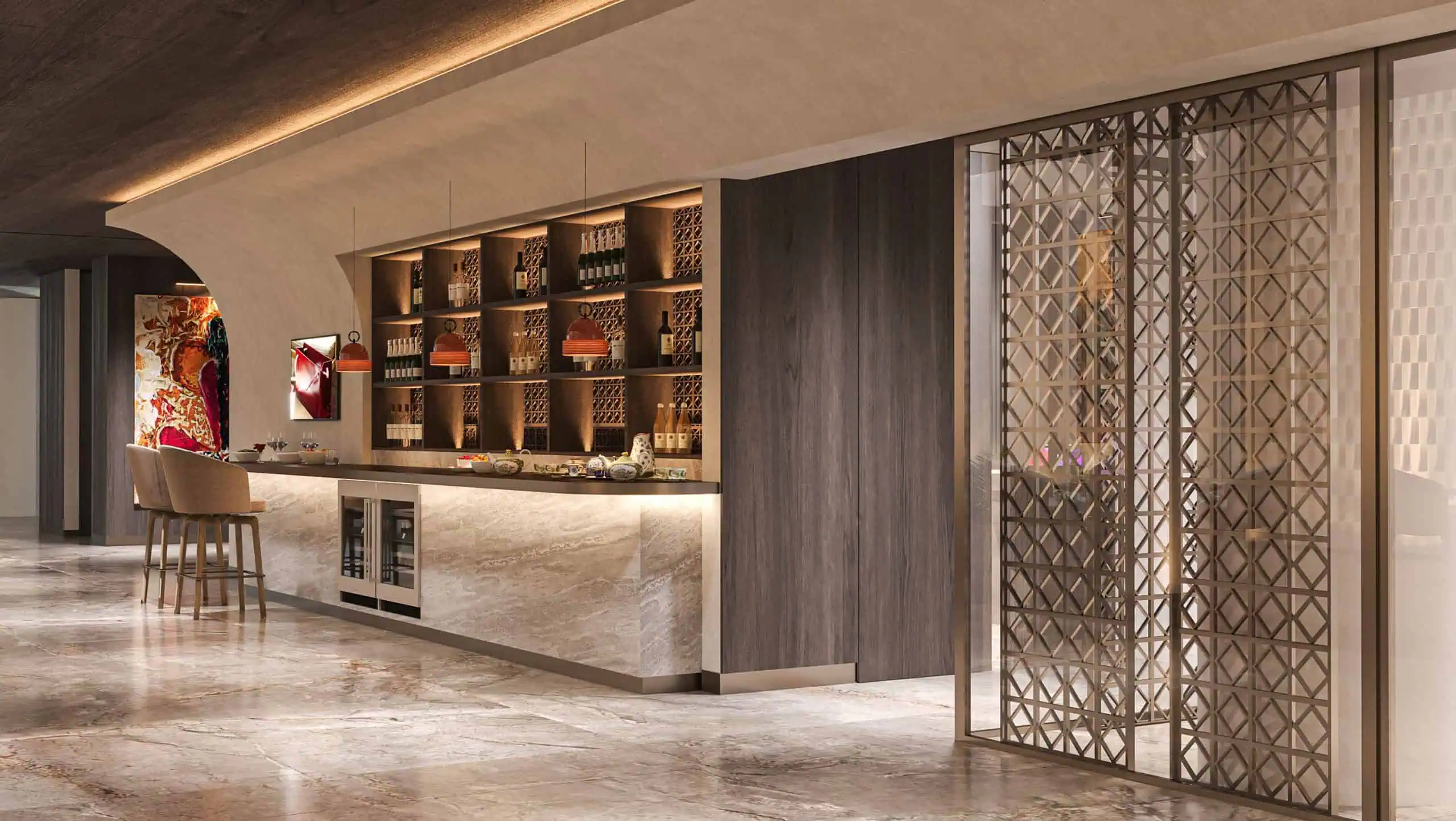
Designing with Legacy: A Dialogue Between Past and Future
Located at the heart of one of Central Asia’s most historic cities, the Samarkand Airport VIP Lounge is a design response to heritage — a spatial narrative shaped by the city’s iconic architecture and intellectual legacy.
The lounge reinterprets the celestial geometry of the Ulugbek Observatory, translating it into a spatial experience where arcs, vaults, and transitional forms evoke both memory and motion. These gestures form the backbone of a design language that is as timeless as it is progressive.
The Spatial Journey: From Corridor to Oasis
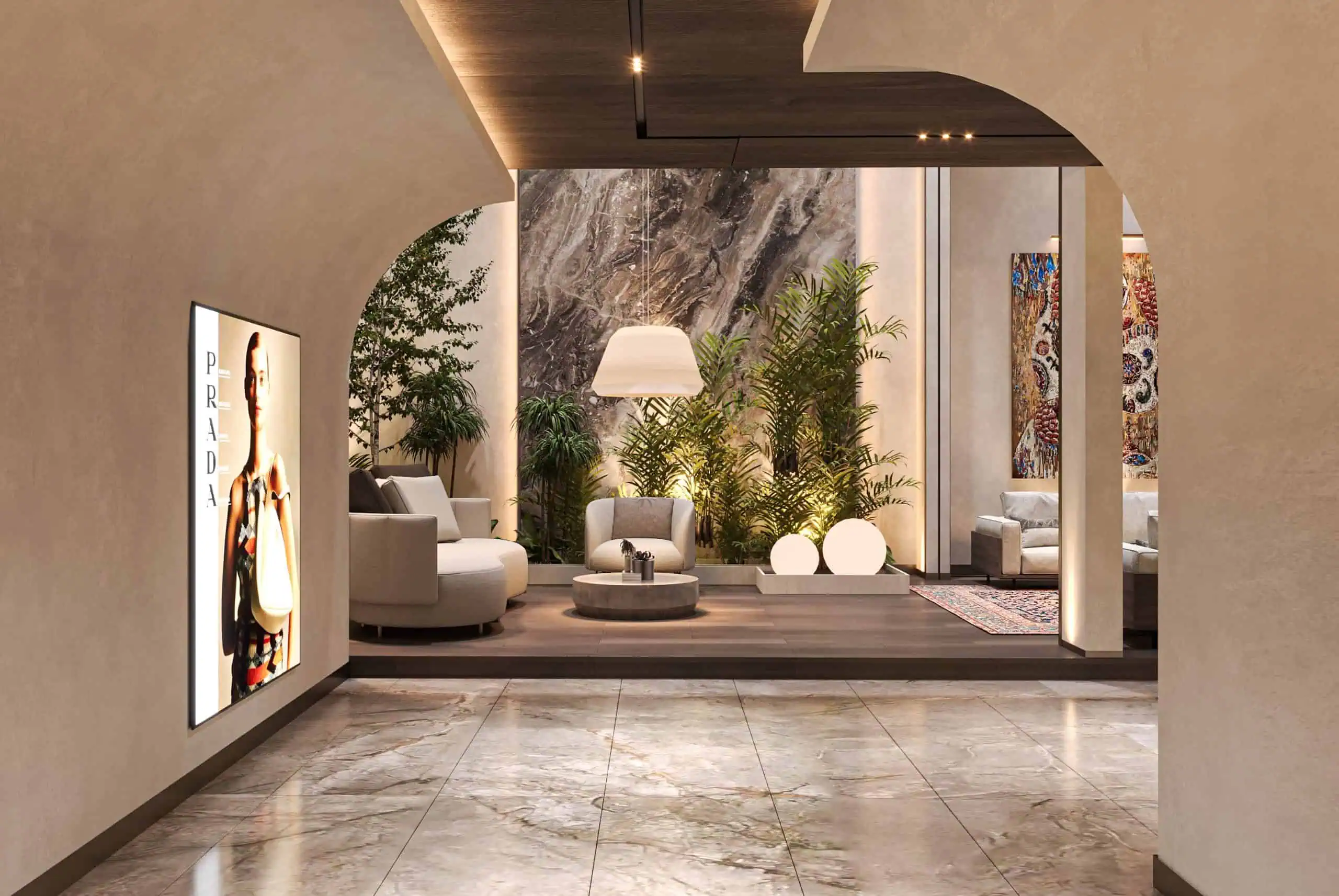
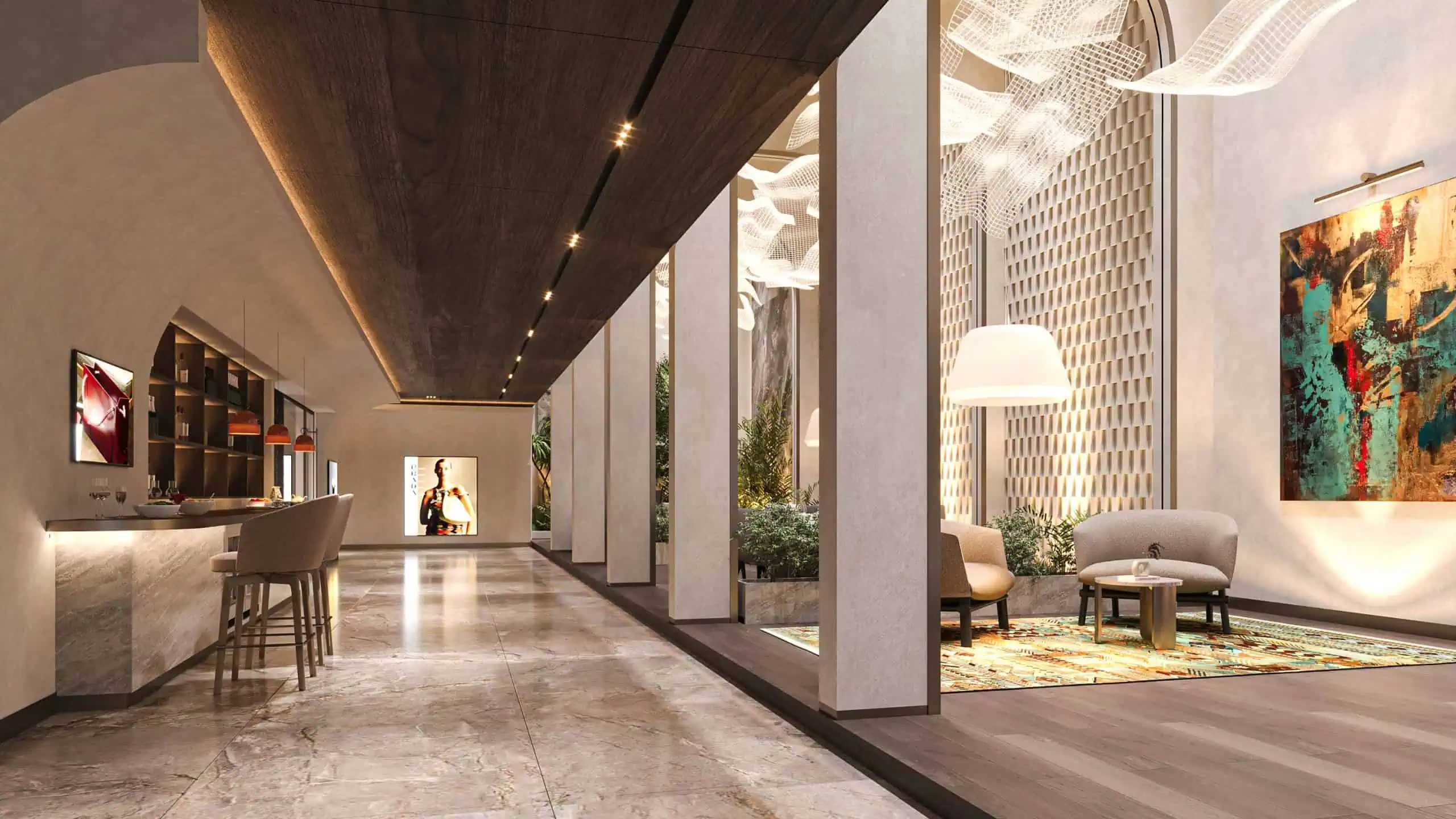
The user experience is orchestrated like a ceremonial procession — beginning with a long, narrow entry corridor that functions as both threshold and transition. This spatial passage, designed as a merchandising hall, gradually opens into a generous lounge area, described conceptually as an “oasis.”
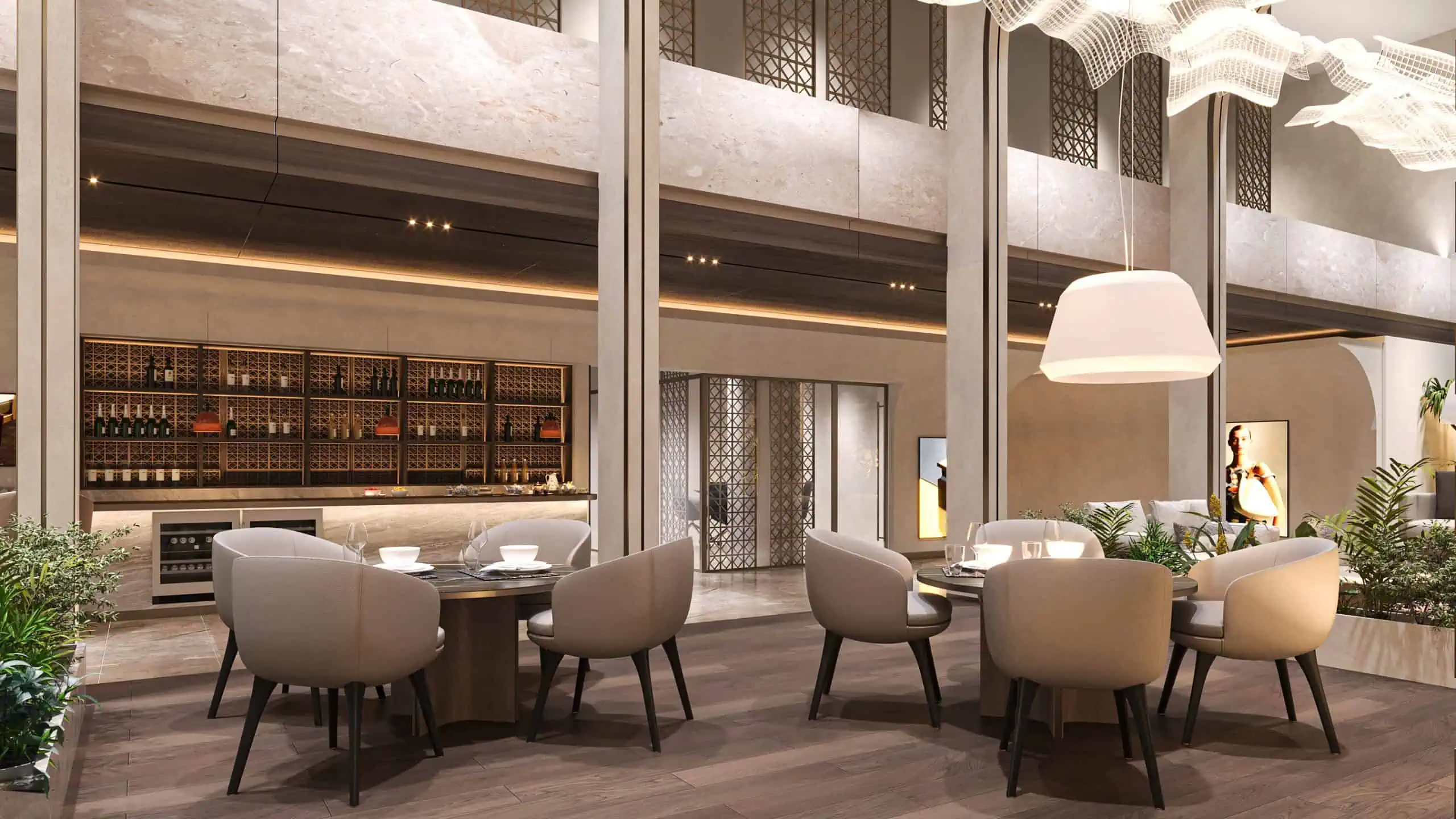
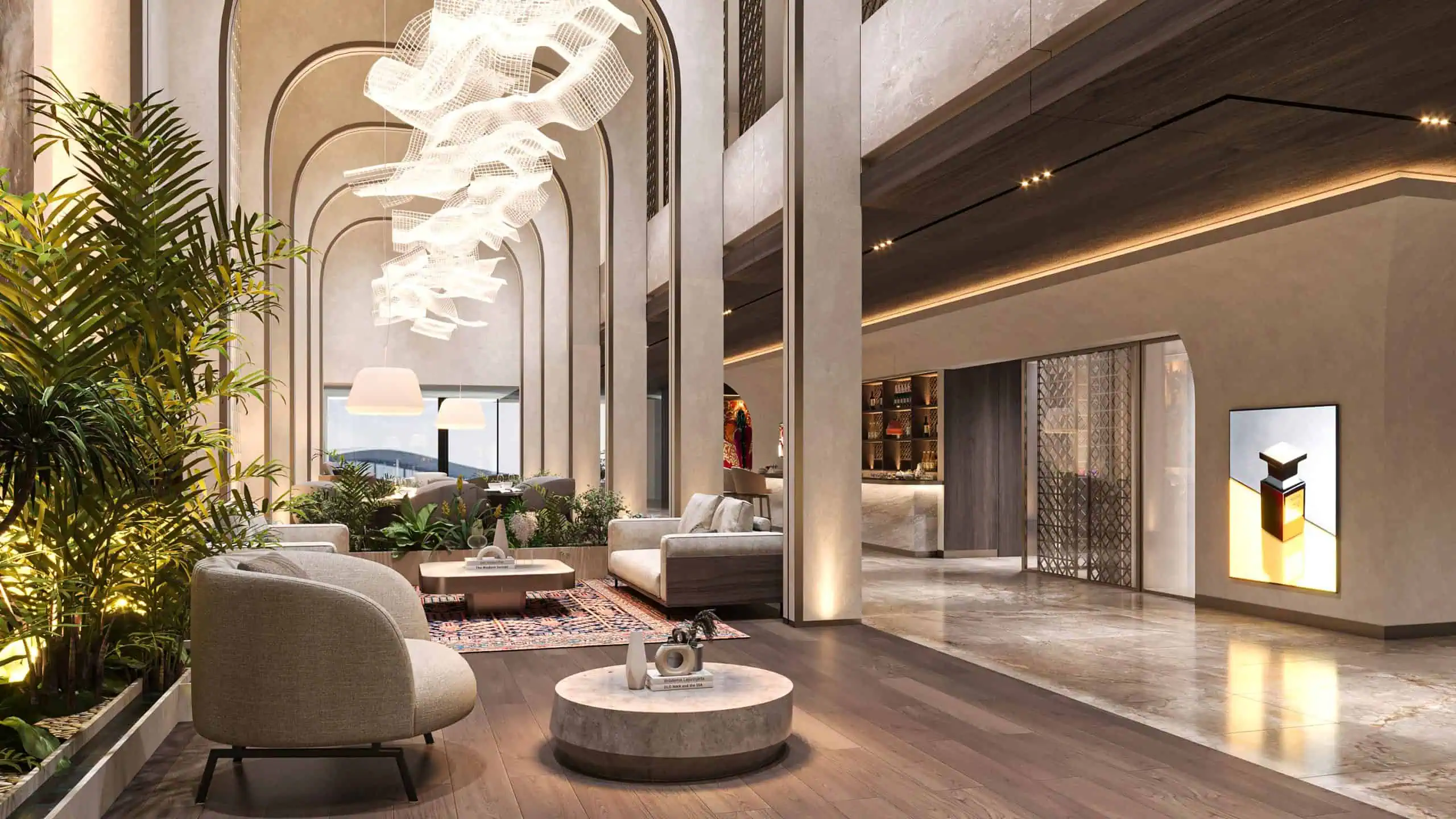
Water elements and curated greenery soften the atmosphere, transforming the space into a sanctuary of calm. The vaulted ceilings, referencing Islamic astronomical architecture, elevate the spatial rhythm and bring a sense of grandeur to an otherwise intimate environment
Cultural Sustainability through Design
While the materials express eco-conscious sourcing and tactile sensitivity, the spatial logic offers programmatic sustainability:
- Flexible circulation pathways that adapt to different user groups
- A passively cooled layout, aided by spatial porosity and natural materials
- Multi-purpose zones like the meeting room and suite that maximize utility in compact footprints
- Integration of local artisanship as a model for cultural economy inclusion
The project’s sustainability is not just ecological — it is cultural, economic, and social.
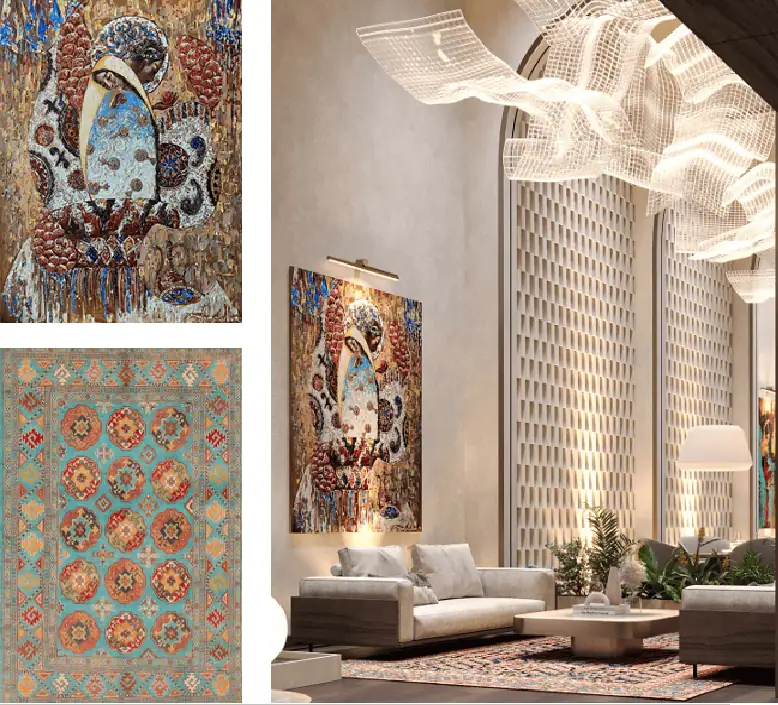
Material Honesty and Cultural Memory
Material selection plays a critical role in anchoring the design to place. The palette includes:
- Locally inspired natural stones in warm, earthy hues
- Brass detailing, a reference to Samarkand’s trade legacy along the Silk Road
- Pastel glazed ceramics echoing the city’s historic tilework
- Brick cladding and handcrafted textures inspired by Samarkand’s architectural motifs
Local artist Akmal Nur’s vivid works become an integral part of the narrative — art is not an addition here, but an embedded language, etched into the experience of the space.
Atmosphere and Well-being
A key ambition of the project is to redefine airport lounges as spaces of well-being, not just function. The lounge provides:
- Acoustic privacy and spatial zoning through layered materials
- Biophilic design via natural textures, plants, and light
- Inclusive comfort with differentiated seating, suite access, and gender-neutral restrooms
The bathrooms, often overlooked in aviation design, have been elevated into experiential spaces, combining curved surfaces, brass accents, and soft light to provide a cohesive continuation of the lounge’s design language.
From Airport to Atmosphere: A Place of Pause
The Samarkand VIP Lounge is not only a response to place — it is a place in itself. It turns transition into tranquility, travel into cultural immersion, and architecture into atmosphere.
“The journey, not the arrival, matters.”
— T.S. Eliot
Next project
Confidential Villa Project
