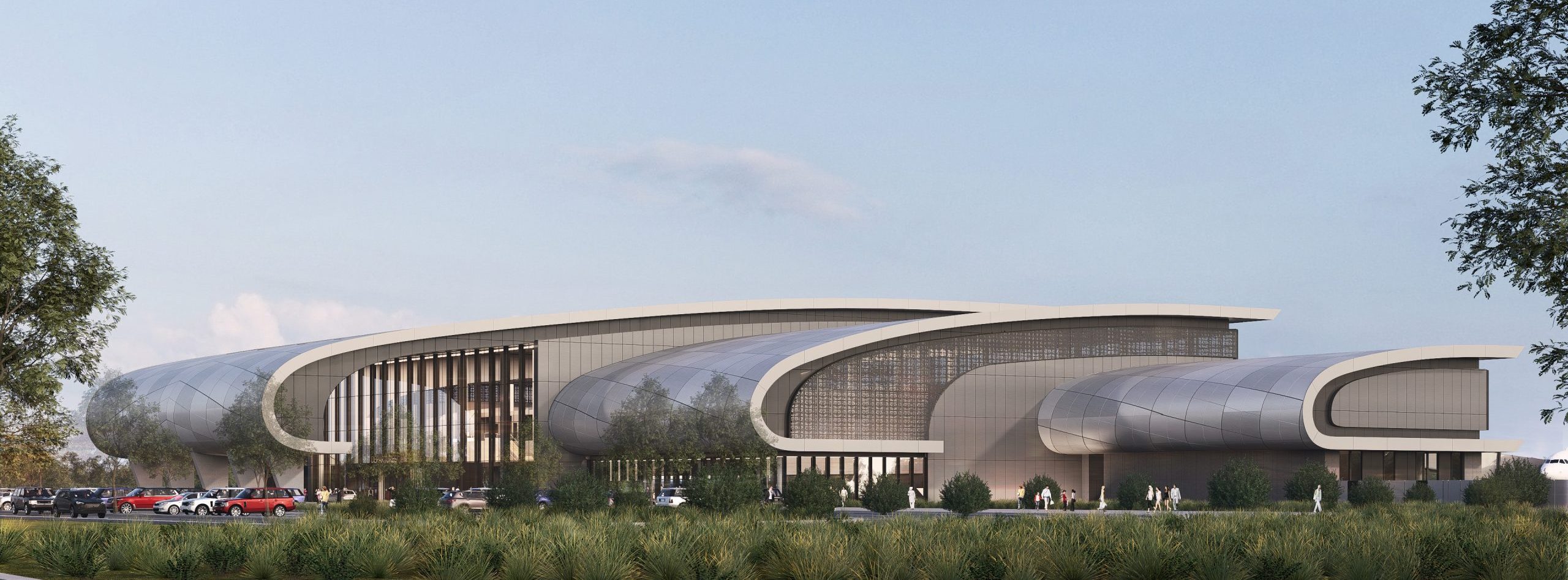
BAGHDAD INTERNATIONAL AIRPORT
Developed as part of an international design competition, the proposal for Baghdad International Airport reimagines Iraq’s primary aviation gateway as a contemporary, resilient, and expandable infrastructure. The project addresses the operational, climatic, and cultural challenges of Baghdad while establishing a clear long-term vision for growth within a phased masterplan framework. Conceived to consolidate existing passenger terminals into a single, efficient facility, the design prioritizes clarity of movement, passenger comfort, and adaptability over time. By combining international aviation standards with a context-driven architectural approach, the proposal positions Baghdad International Airport as a future-ready civic landmark and a strategic regional hub.
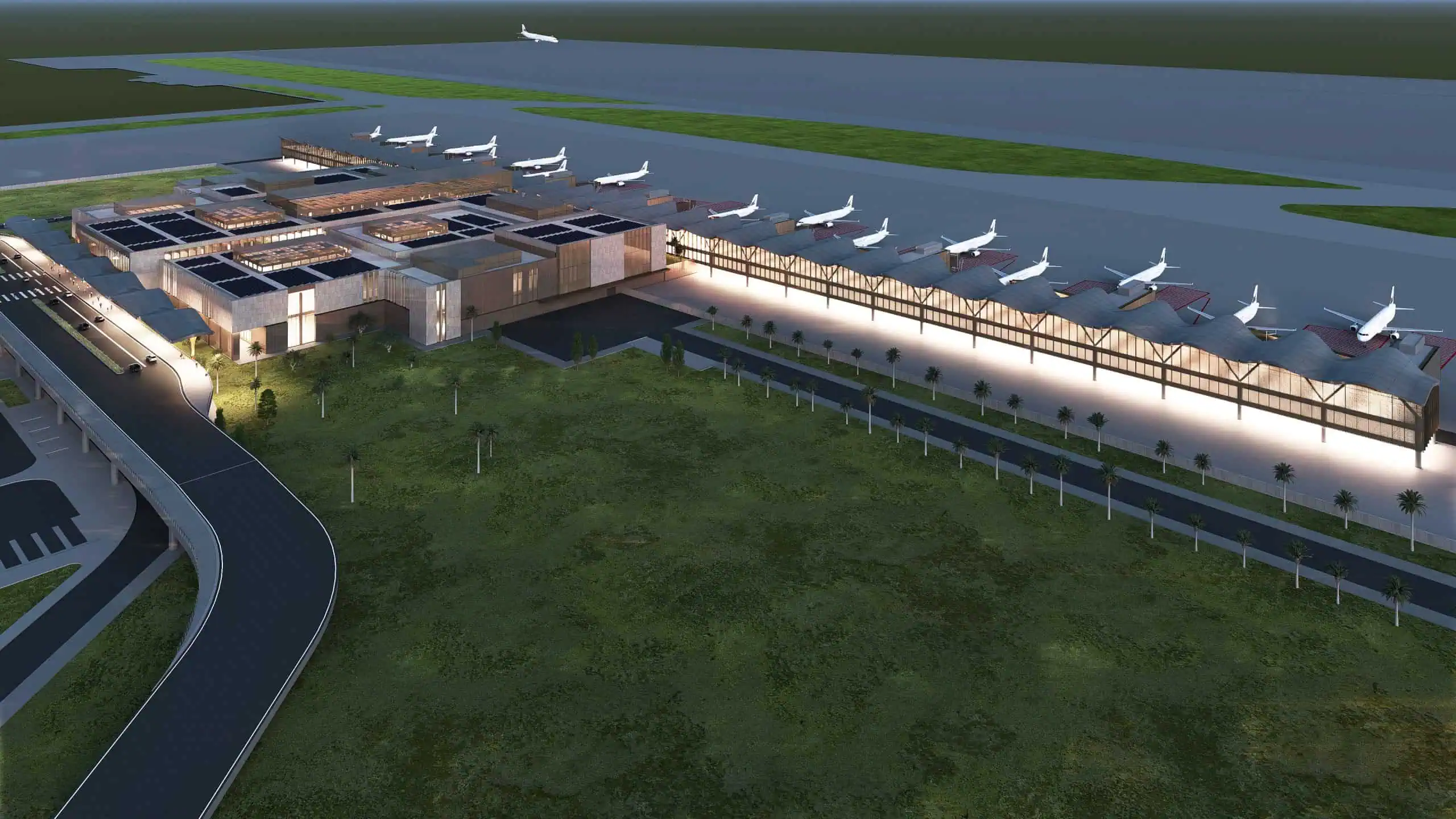
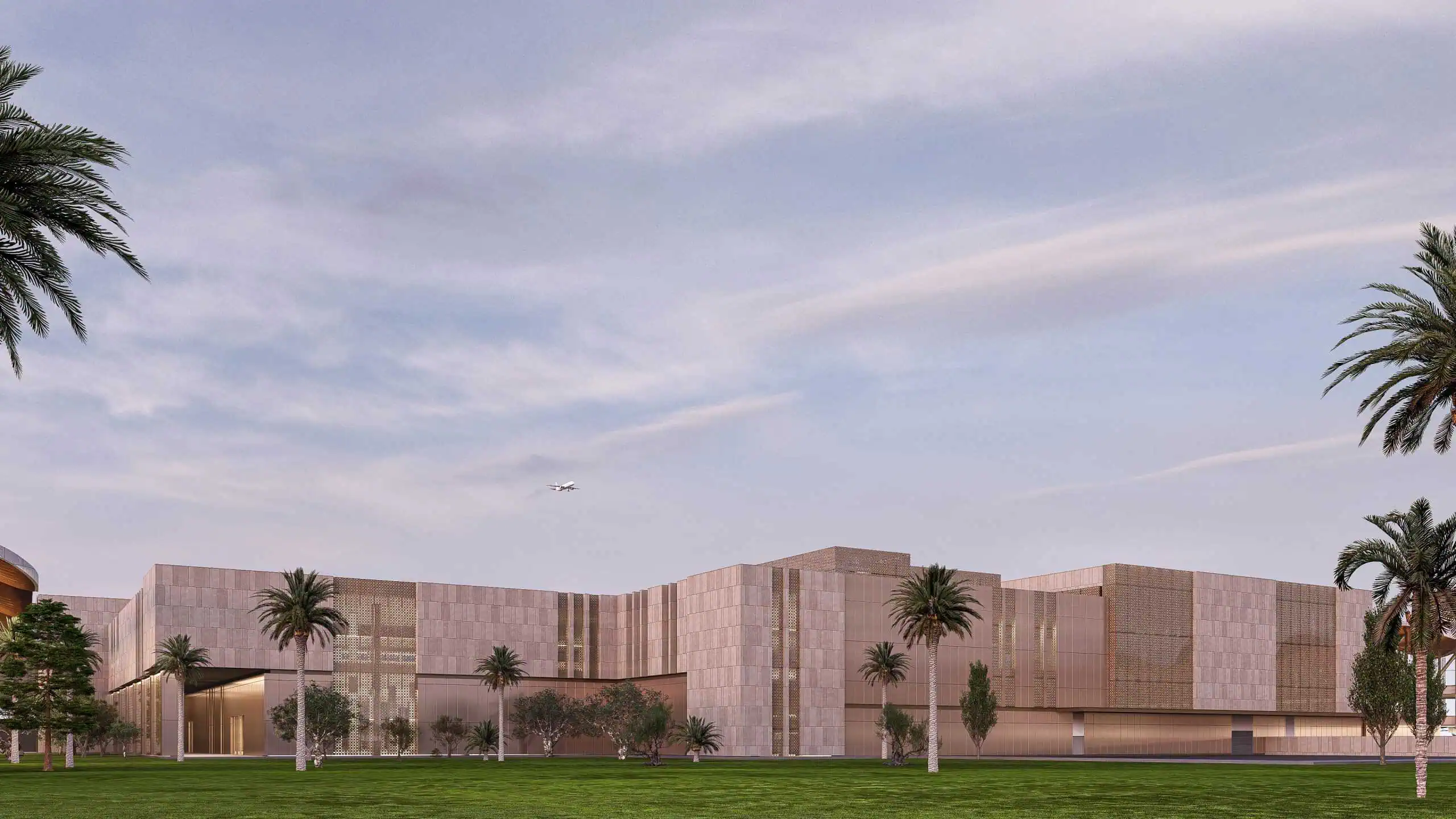
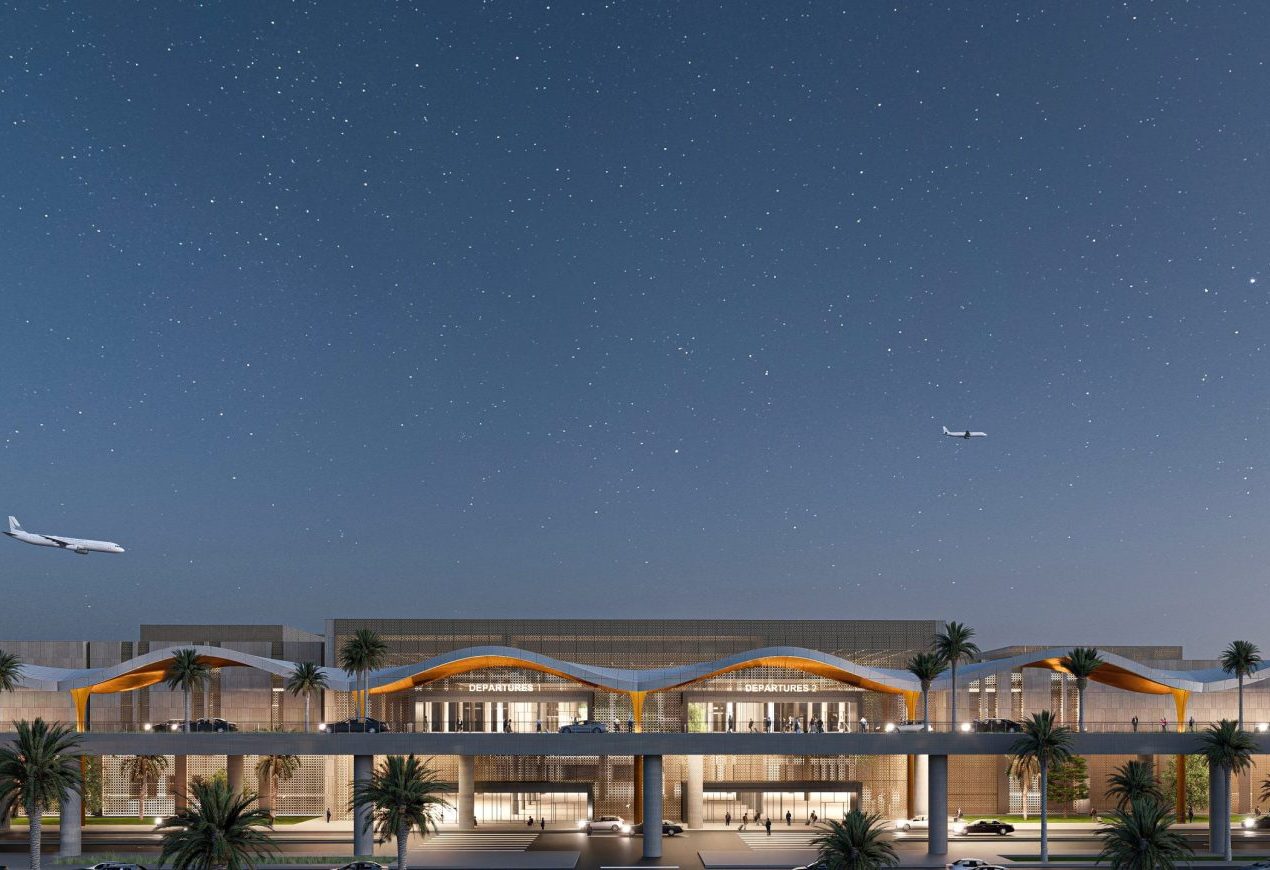
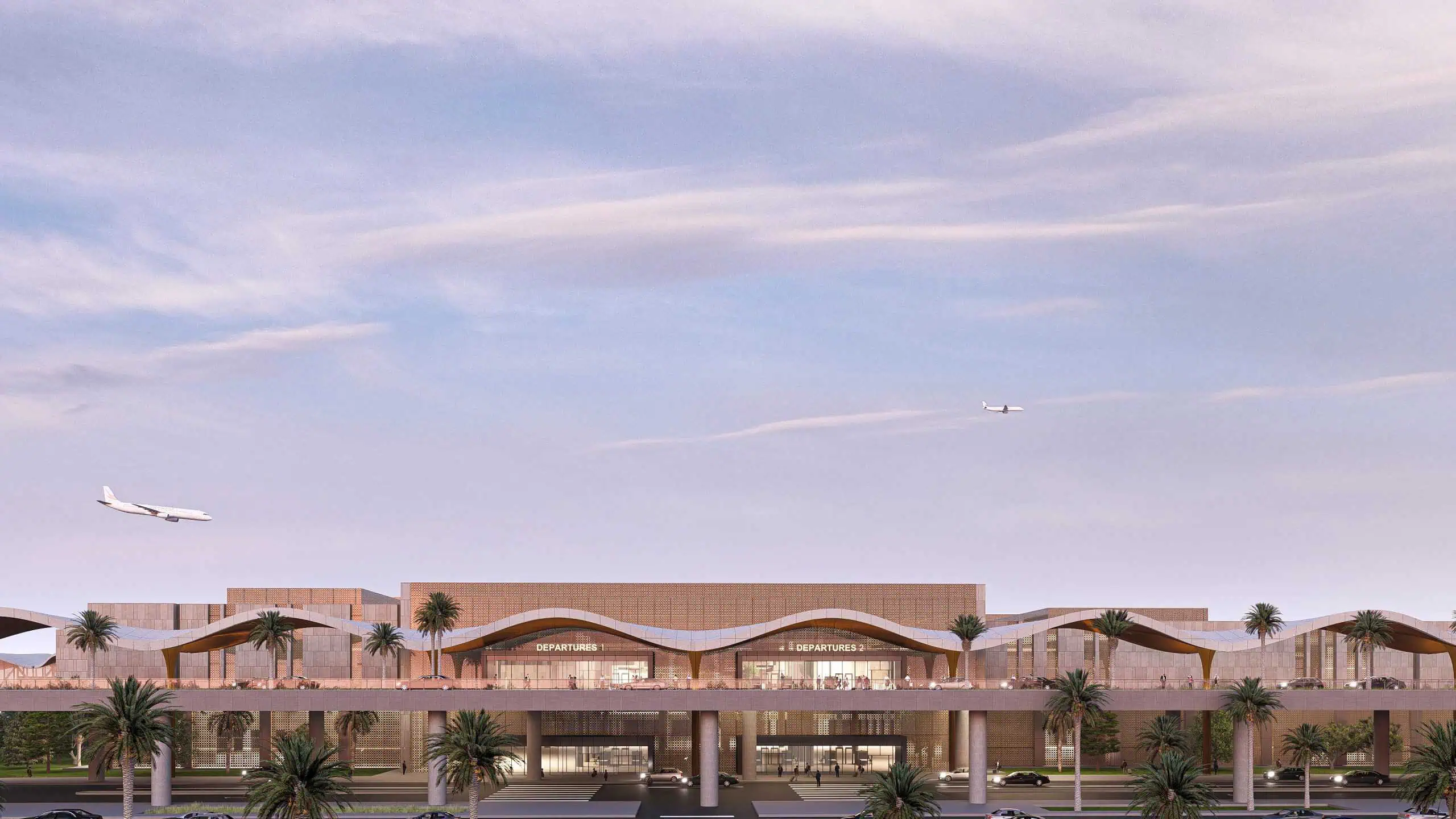
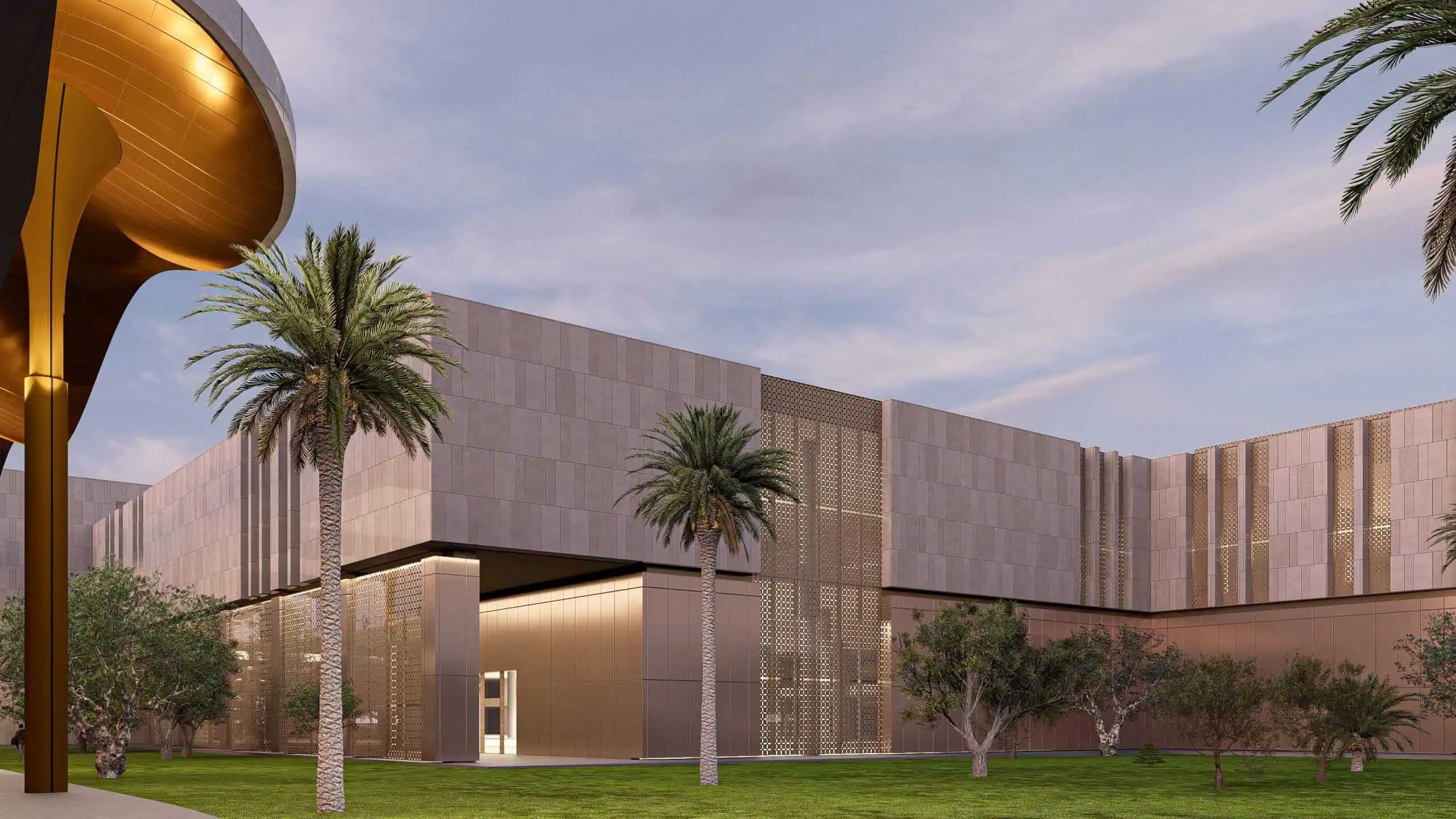
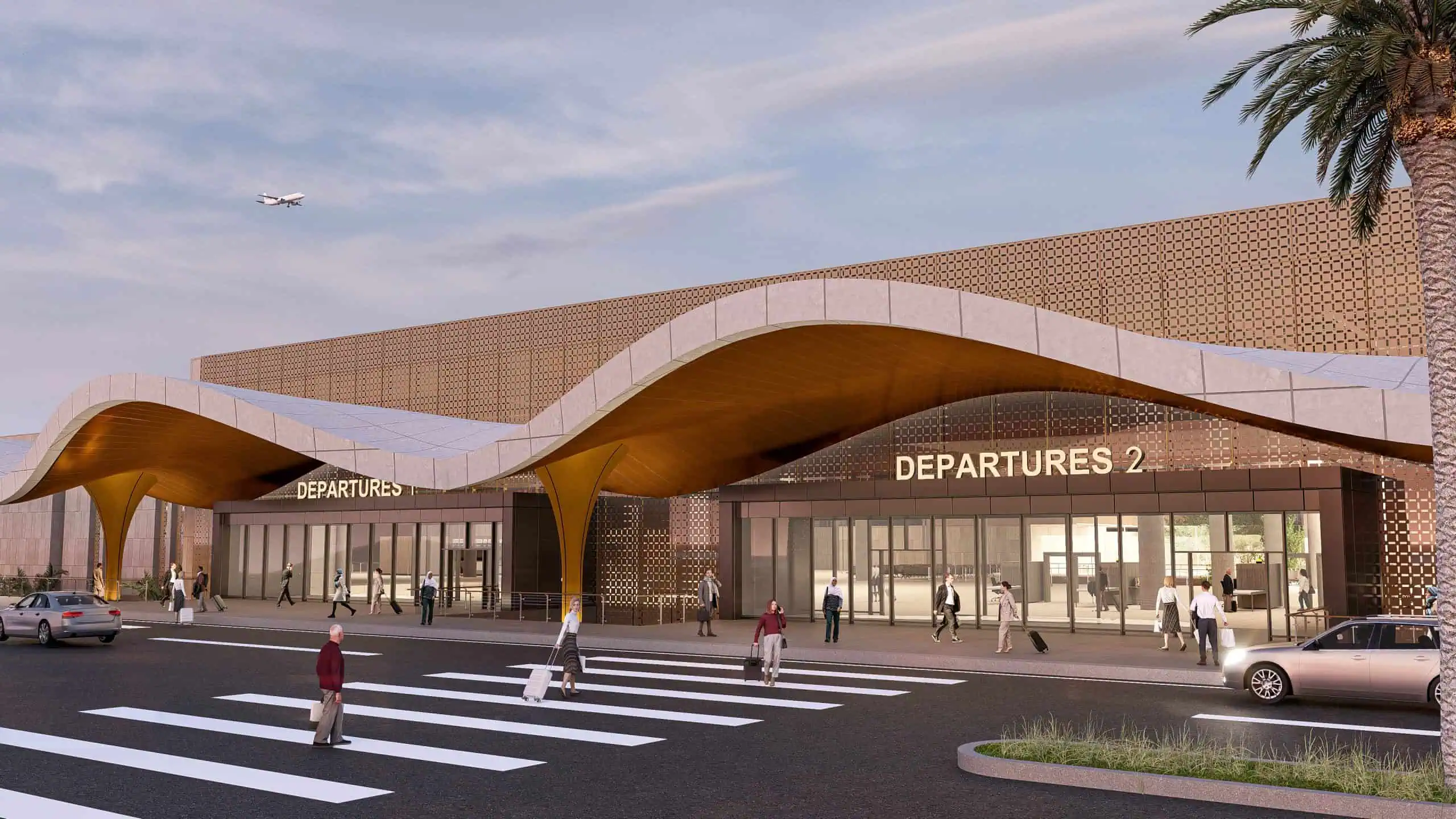
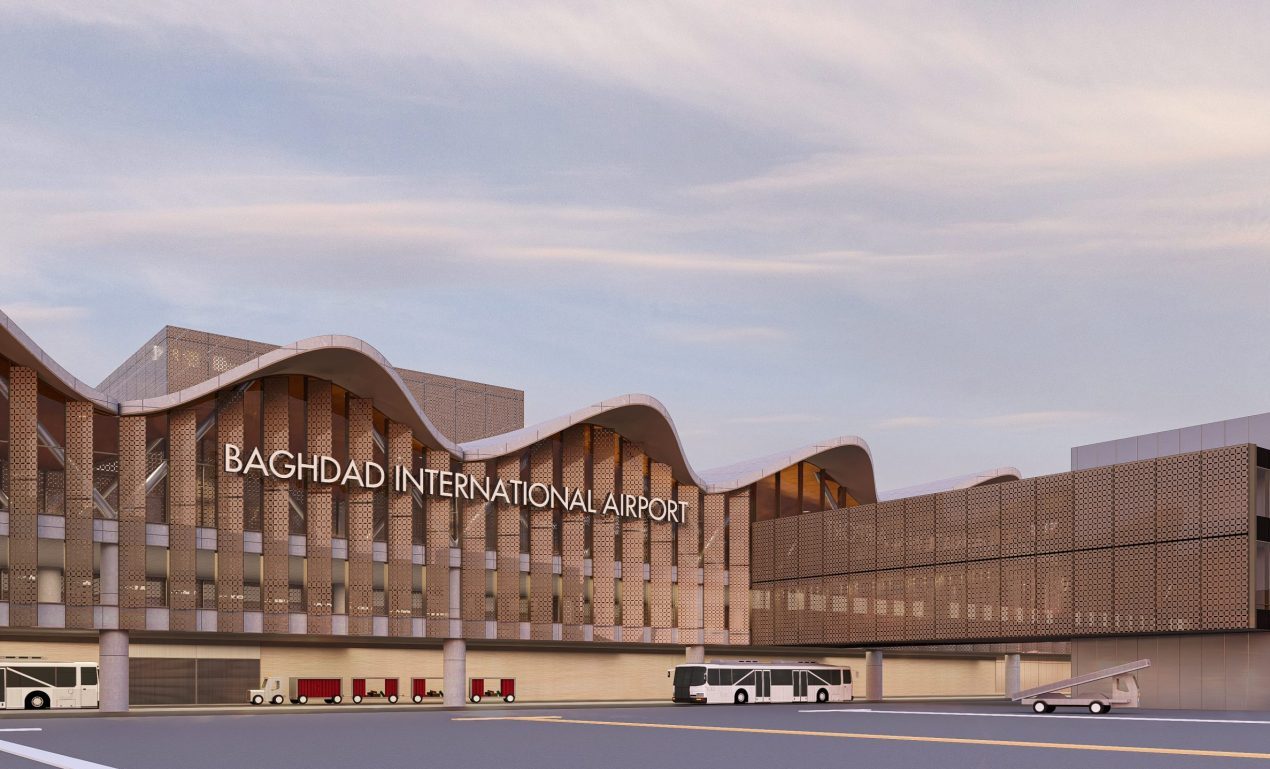
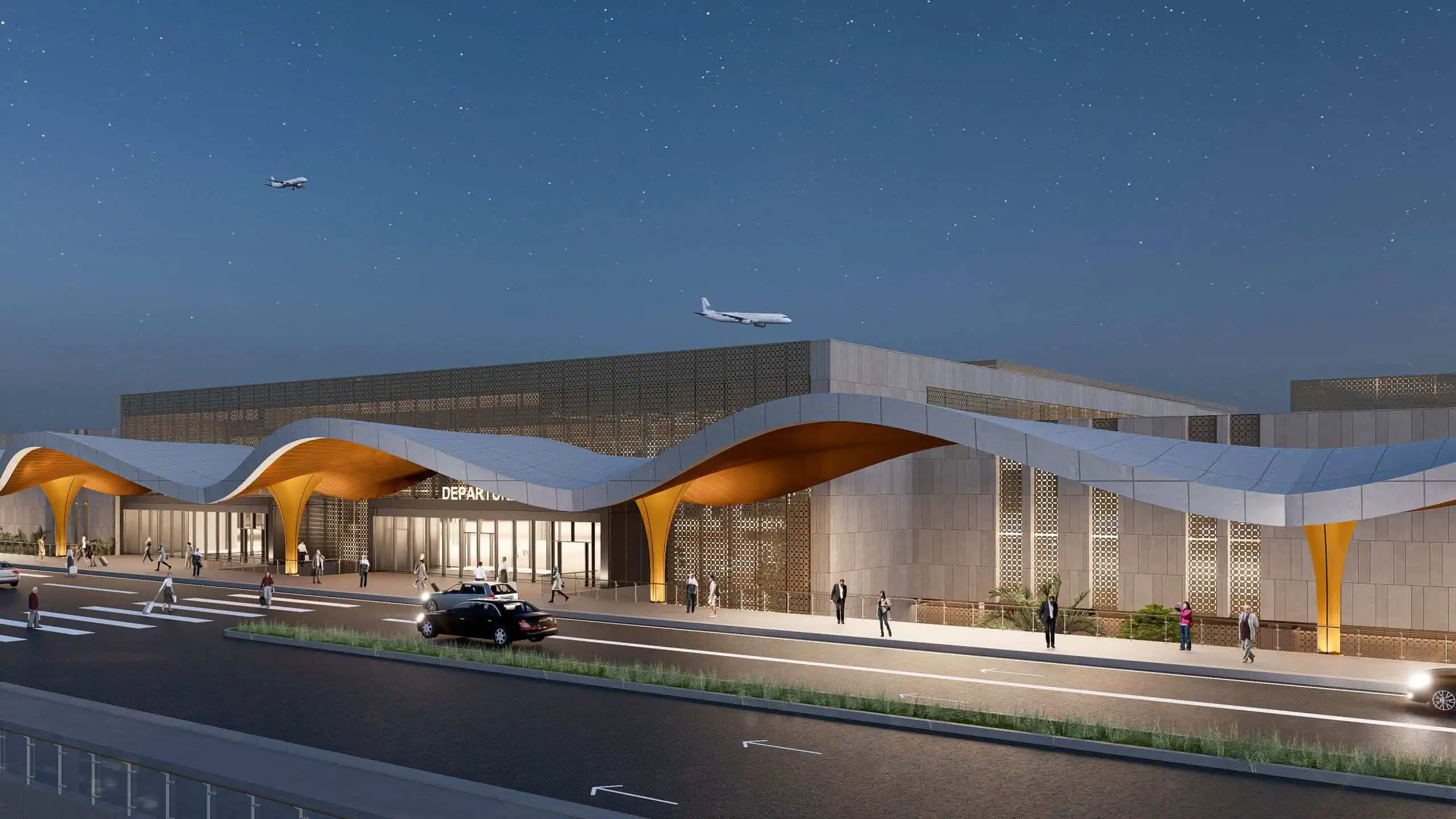
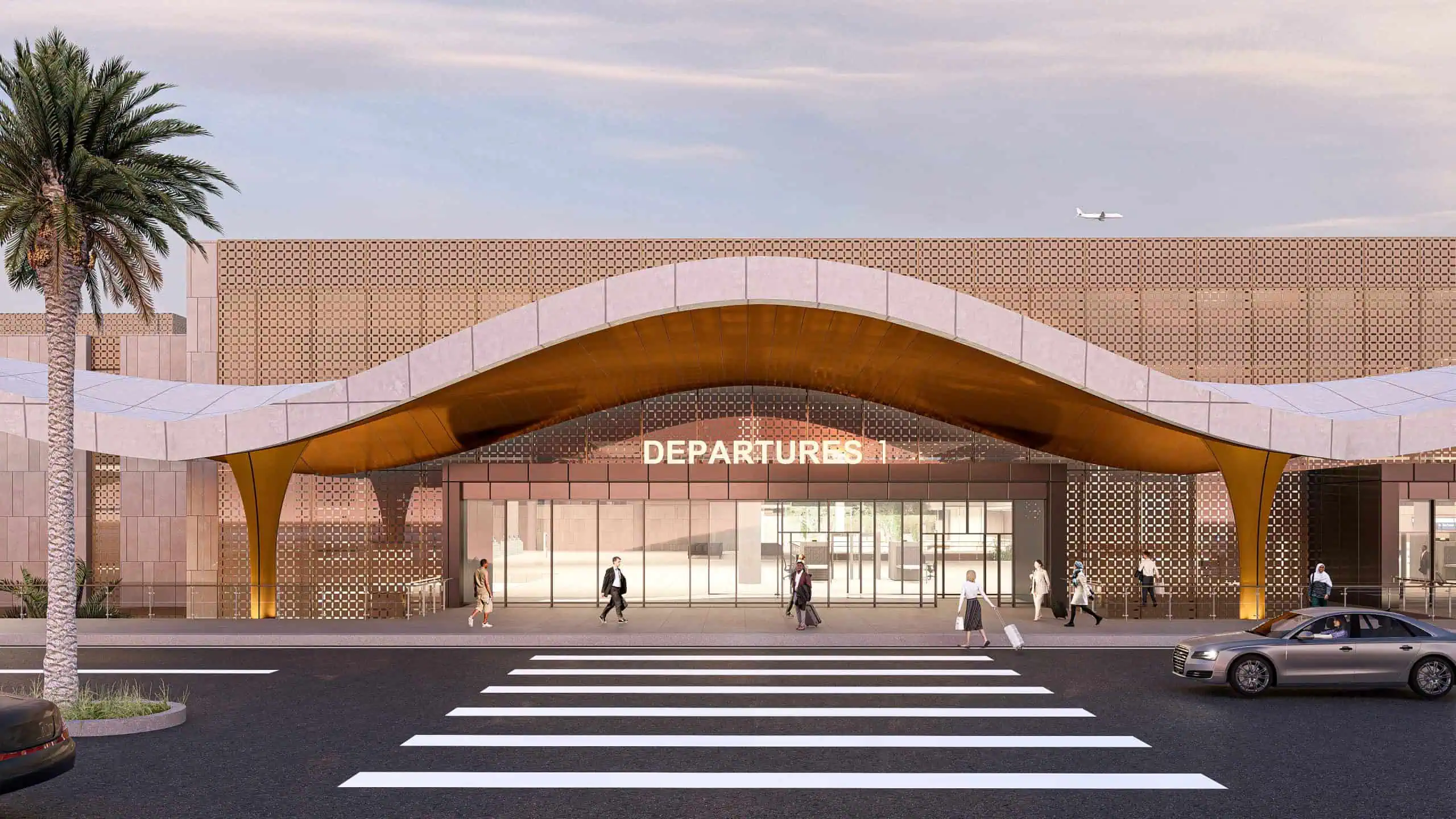
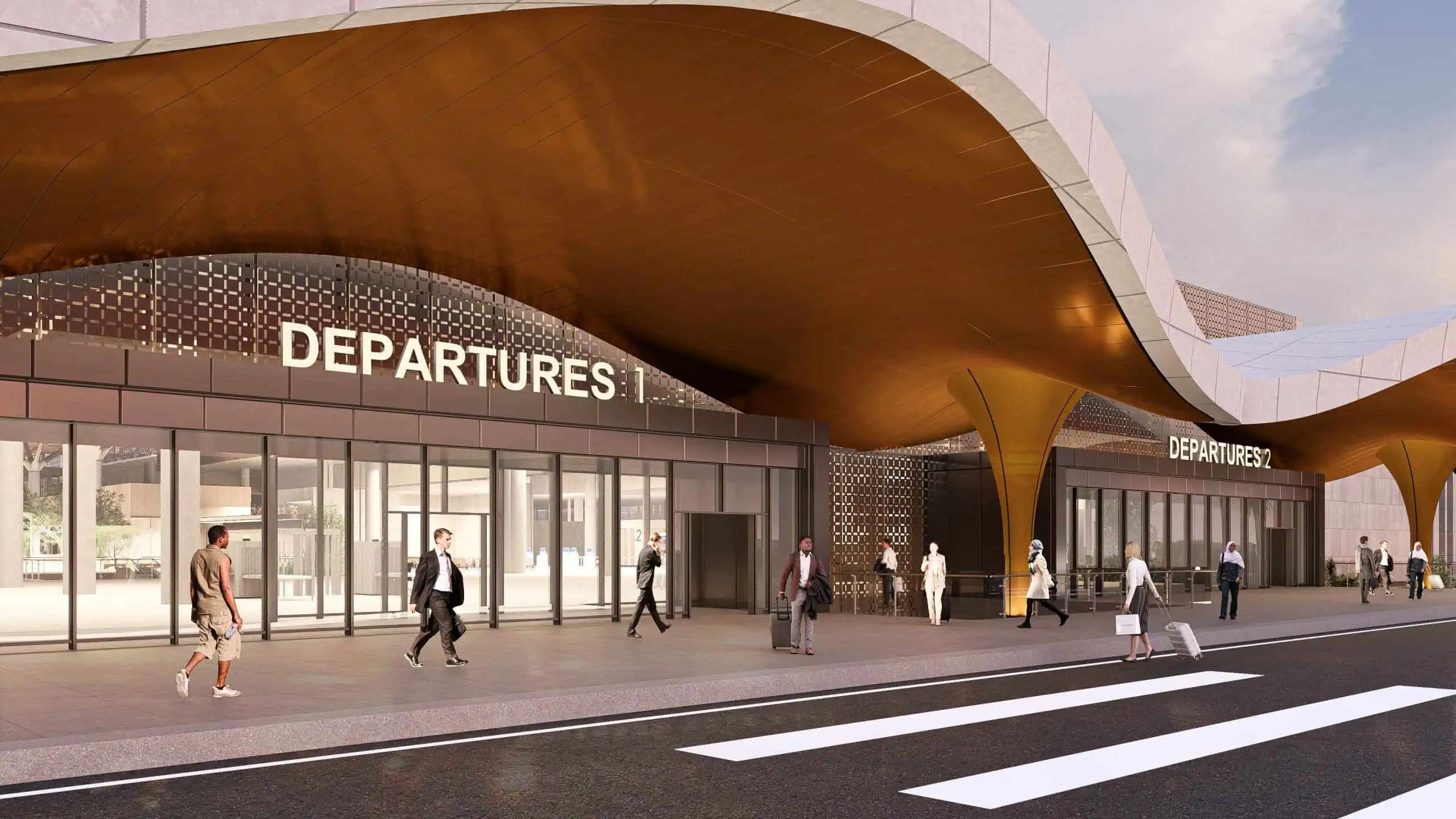
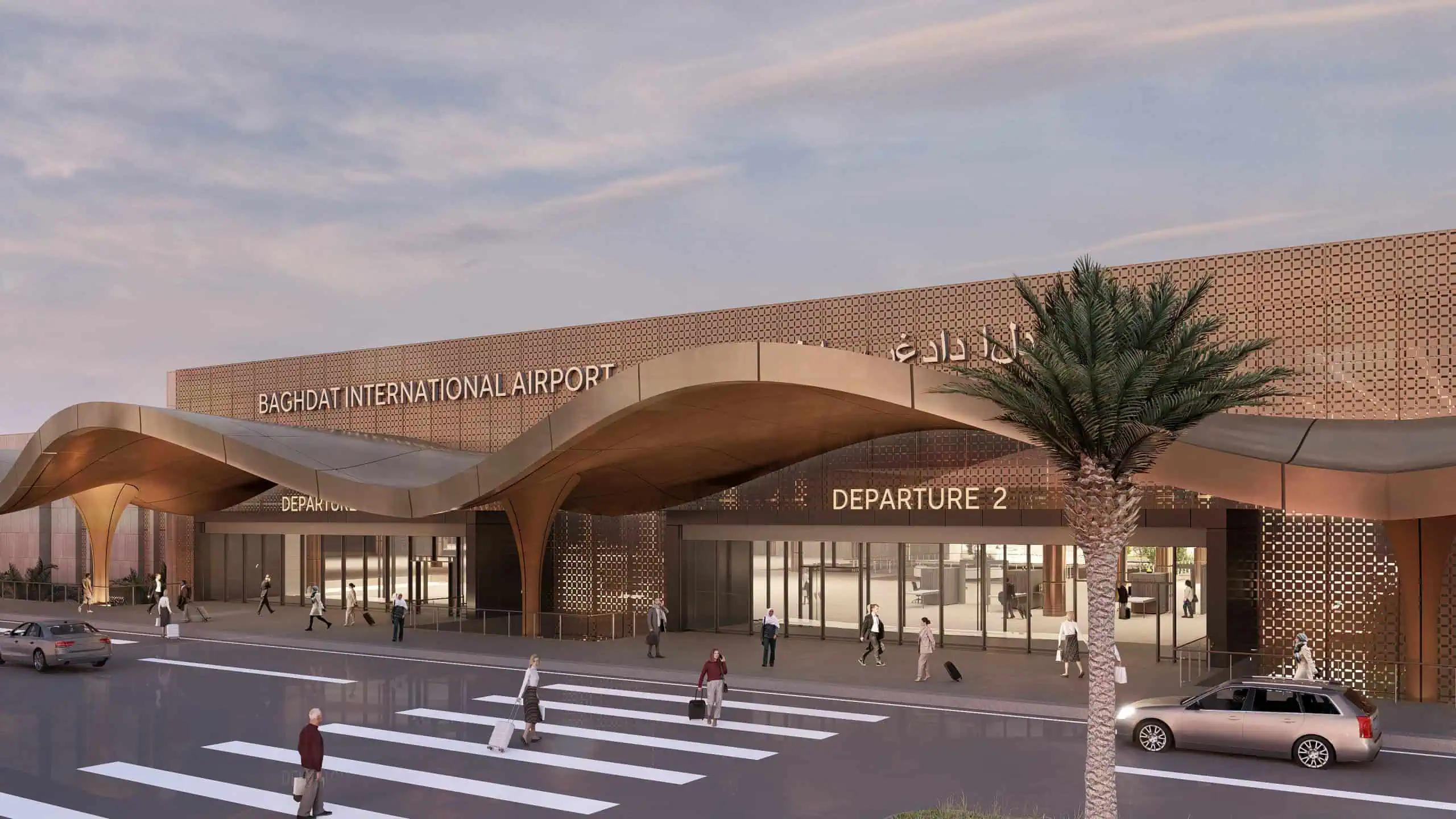
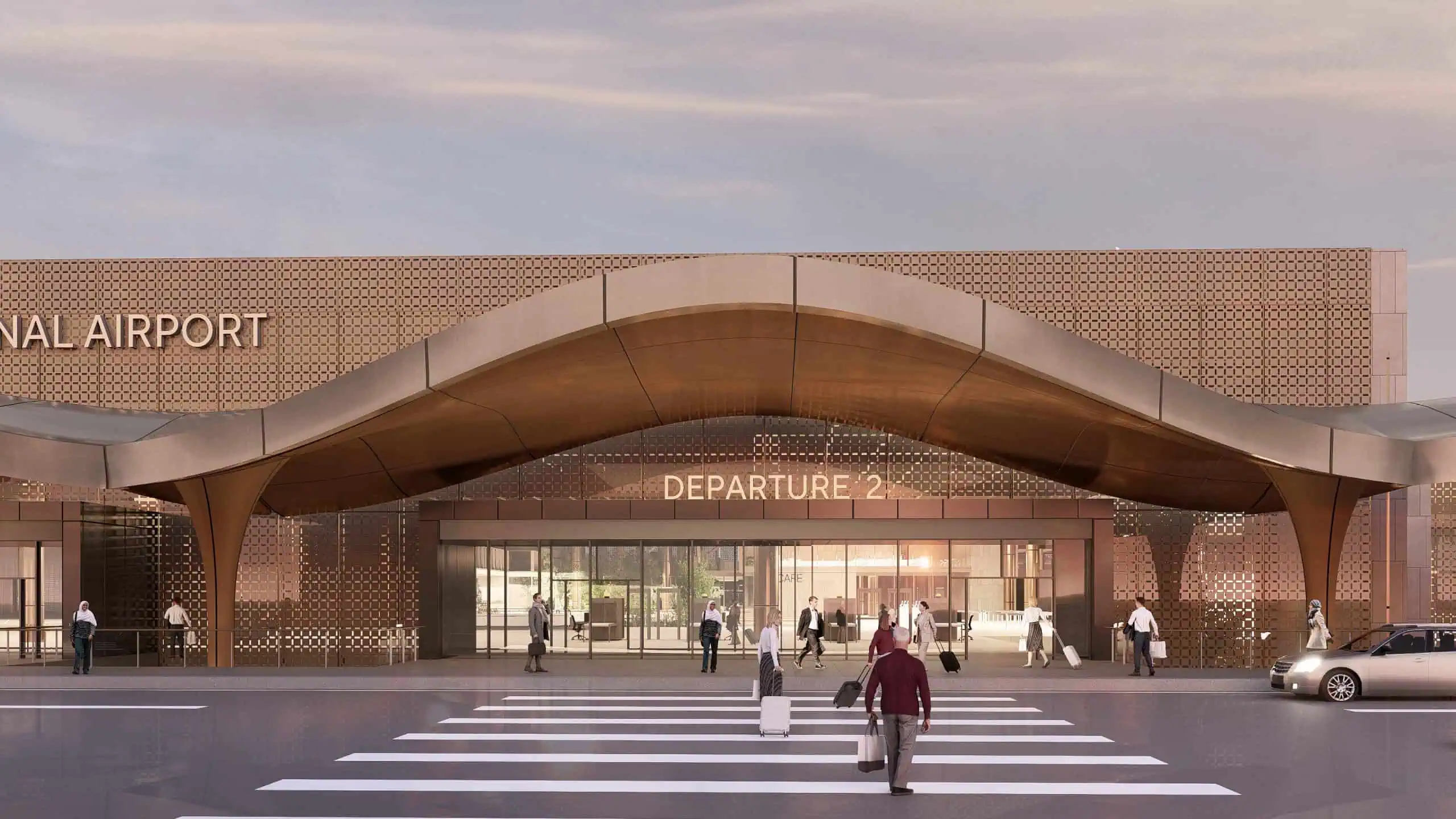
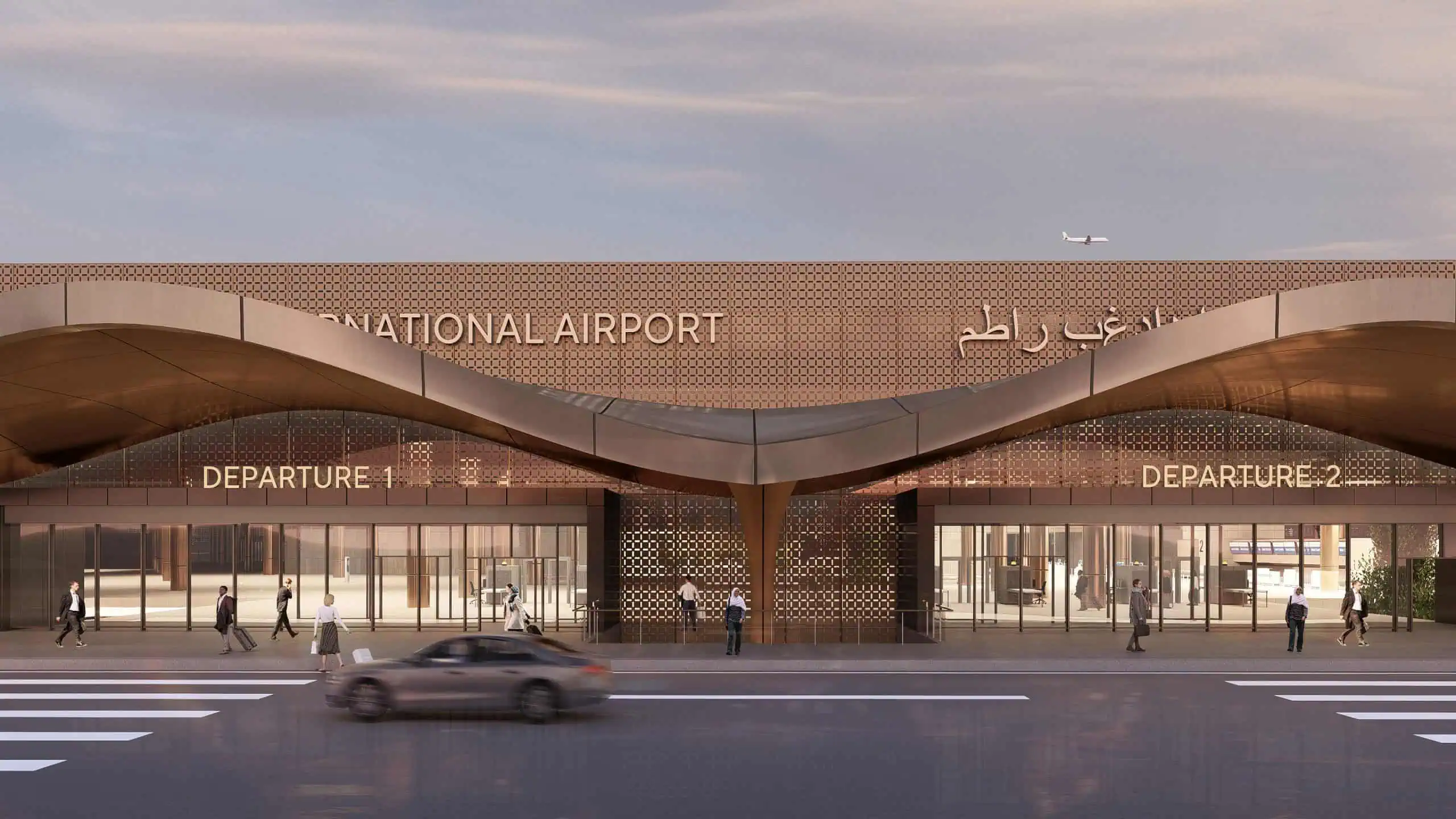
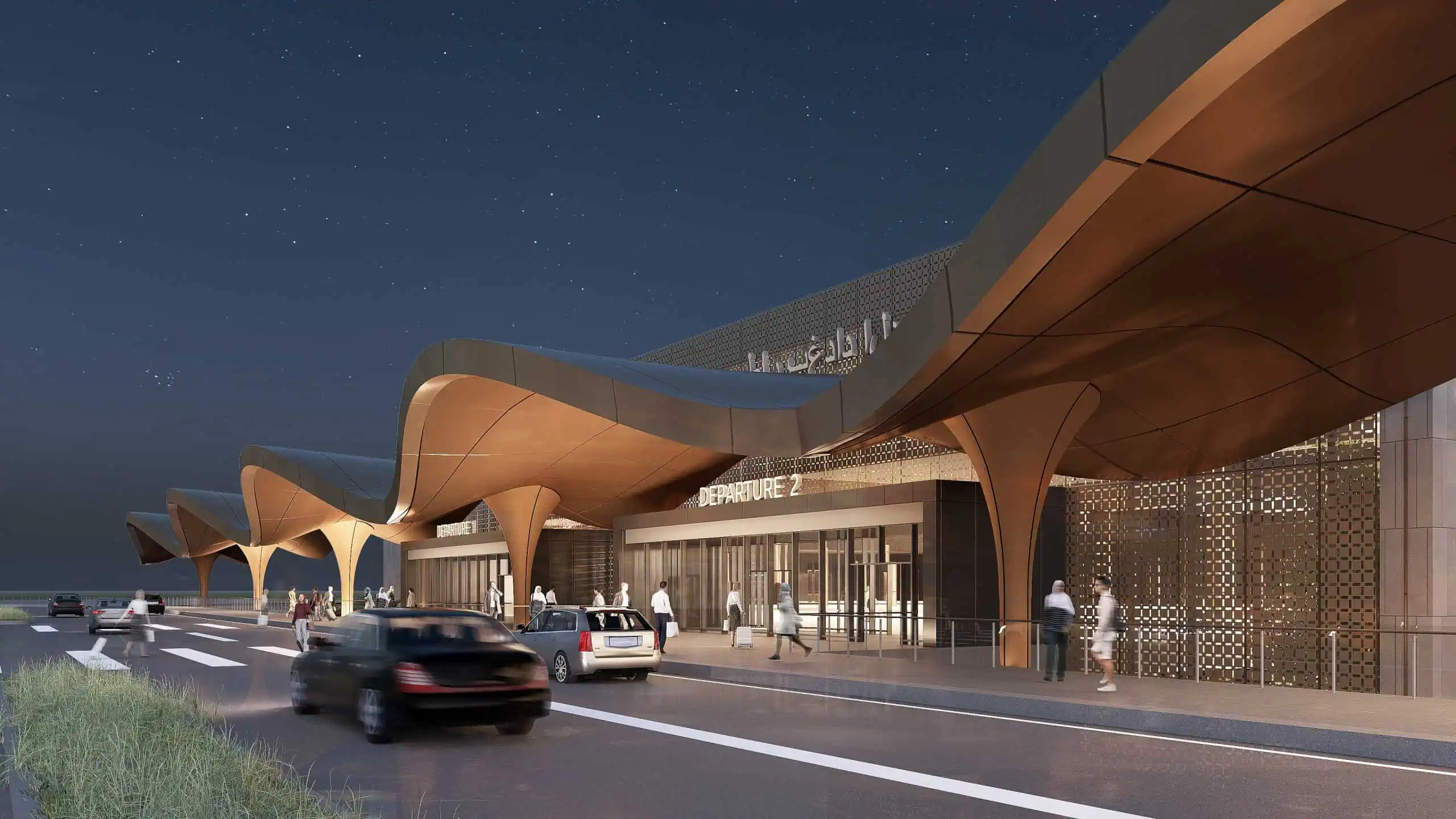
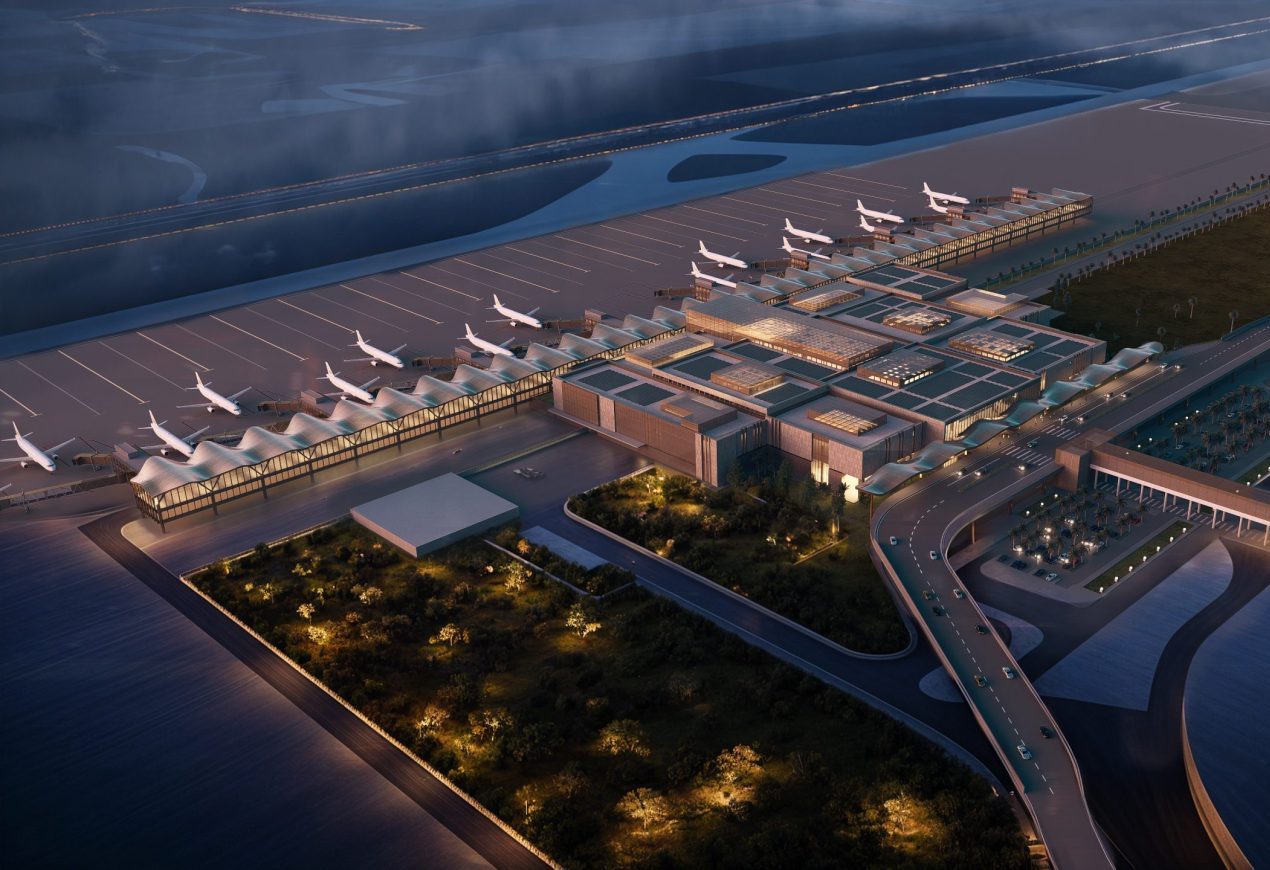
The terminal façade establishes a contemporary gateway while directly engaging with airside operations.
A Gateway Between City and Region
The project envisions the airport not only as a transport hub, but as a civic-scale interface between the city, the region, and global networks. Conceived as a contemporary gateway to Baghdad, the terminal combines international operational standards with an architectural language shaped by local culture and climate. Rather than operating as an isolated infrastructure, it is designed as a spatial connector that balances efficiency with experience, reinforcing a clear sense of place and arrival.
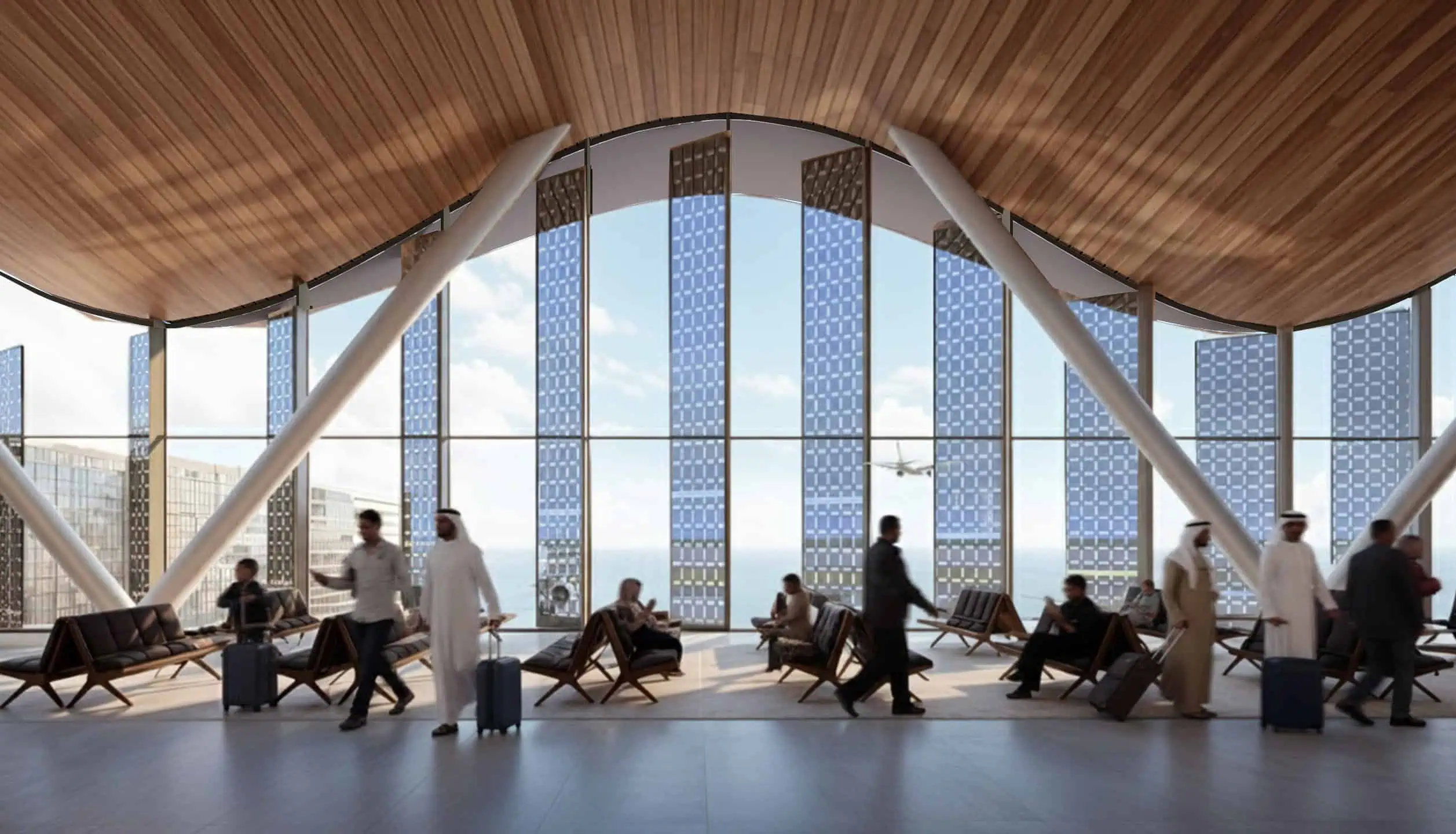
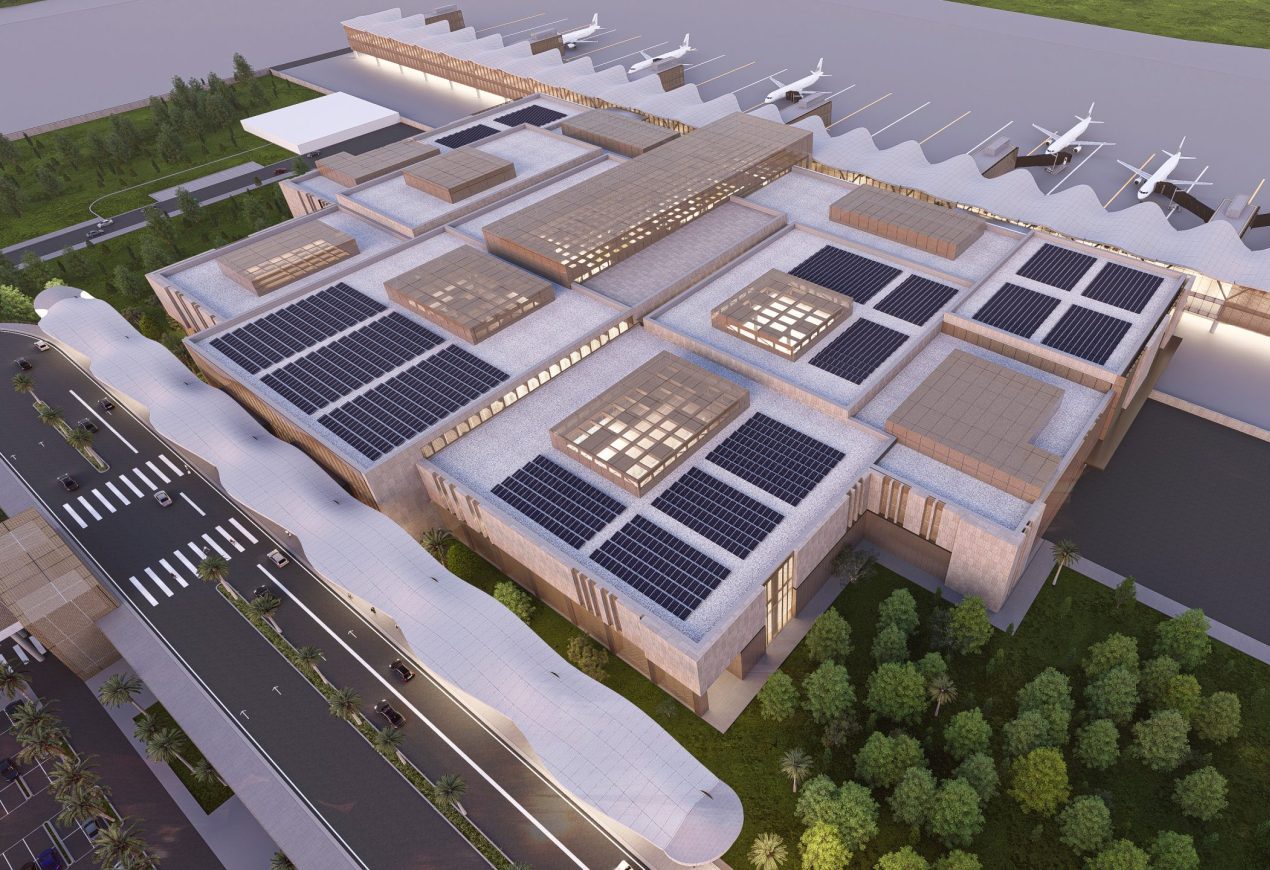
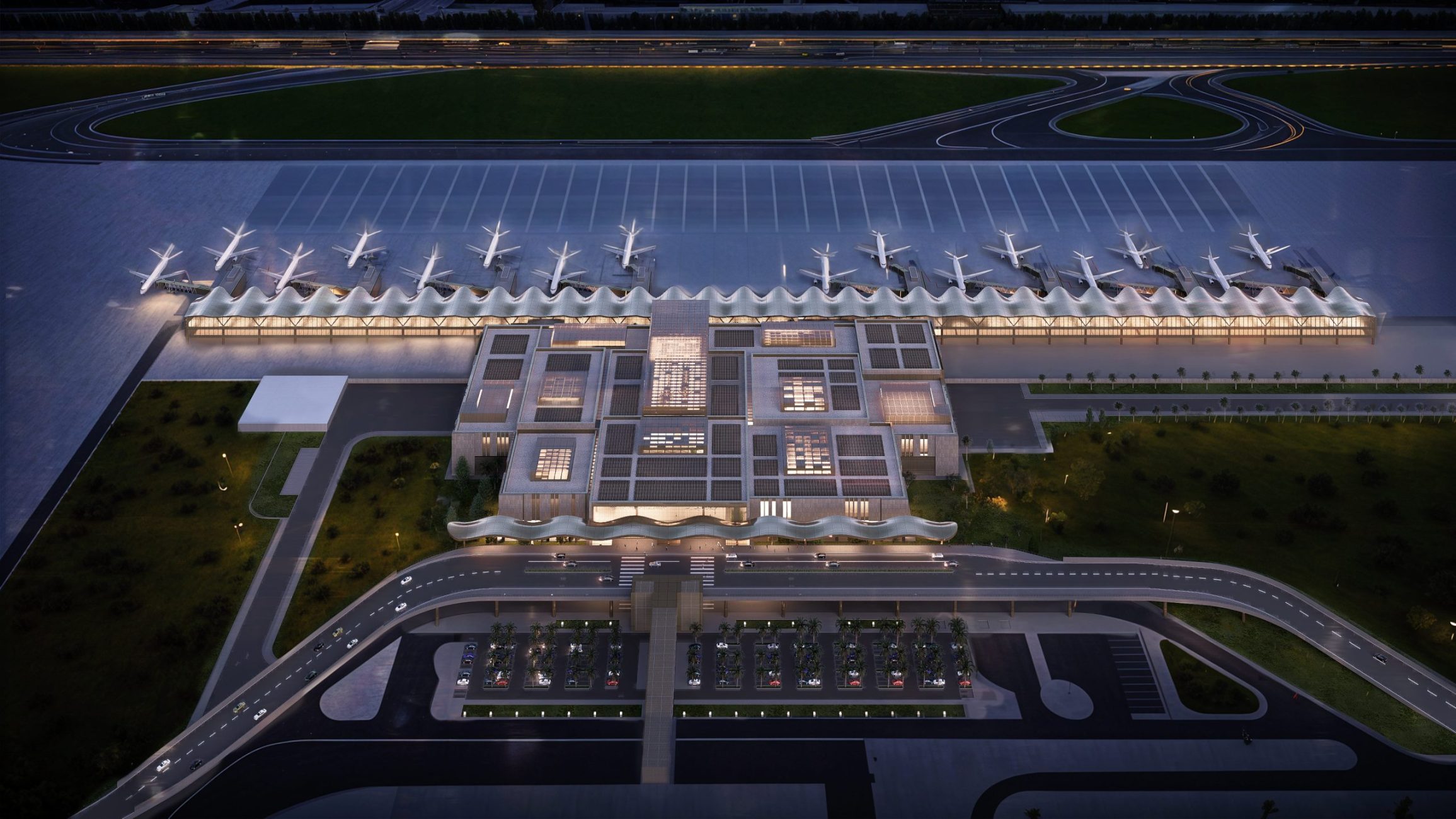
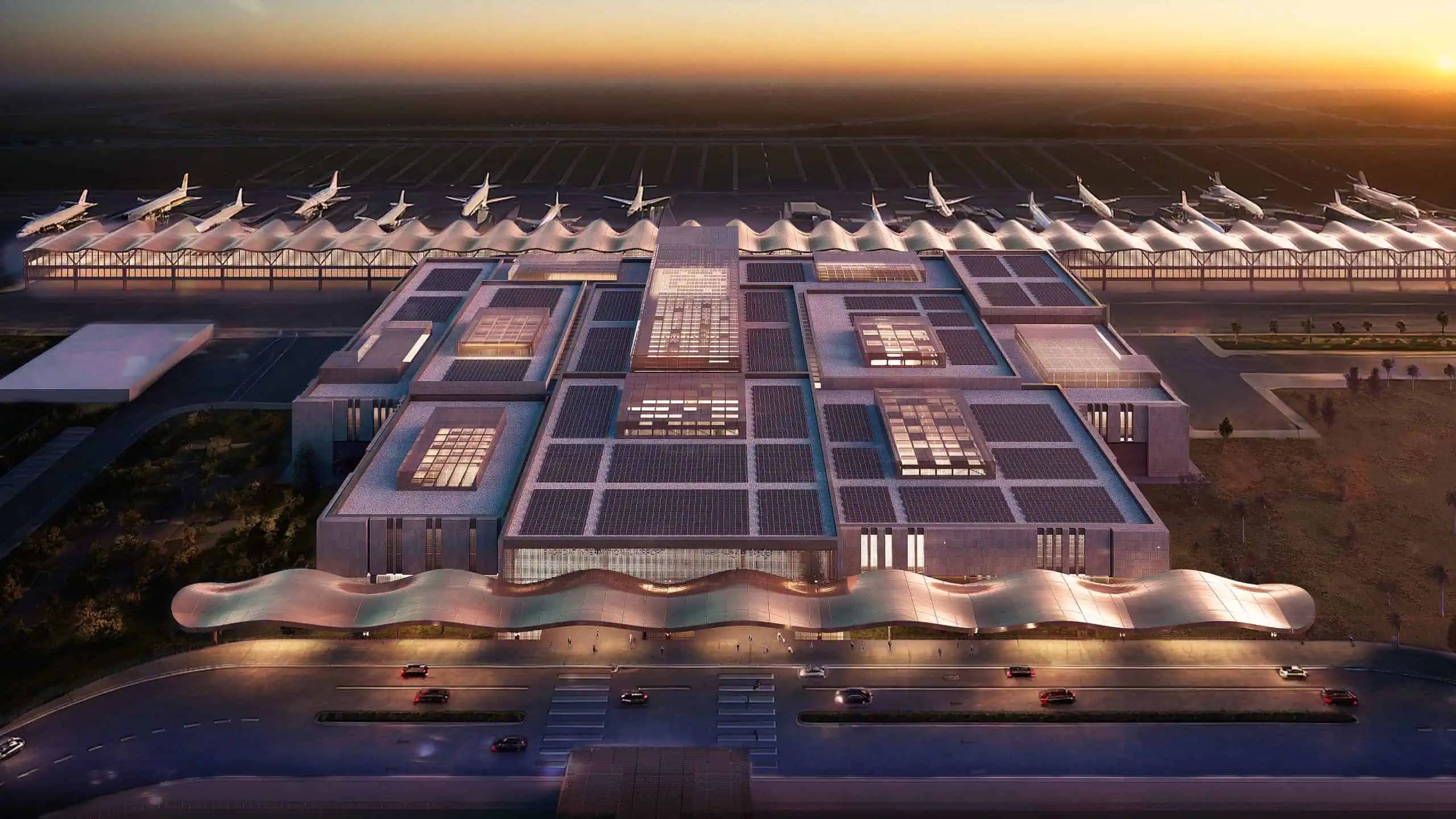
The roofscape integrates daylight, shading, and photovoltaic systems as part of the terminal’s environmental response.
Climate As A Design Driver
Located 16 km west of Baghdad city center, the airport is set within a flat, arid landscape defined by extreme heat, dust storms, and high solar exposure. Rather than being treated as constraints, these environmental conditions become primary design drivers—shaping the terminal’s orientation, massing, shading strategies, and building envelope performance. The project responds through a compact and modular organization, integrating passive measures with high-performance systems to ensure long-term environmental efficiency and passenger comfort.
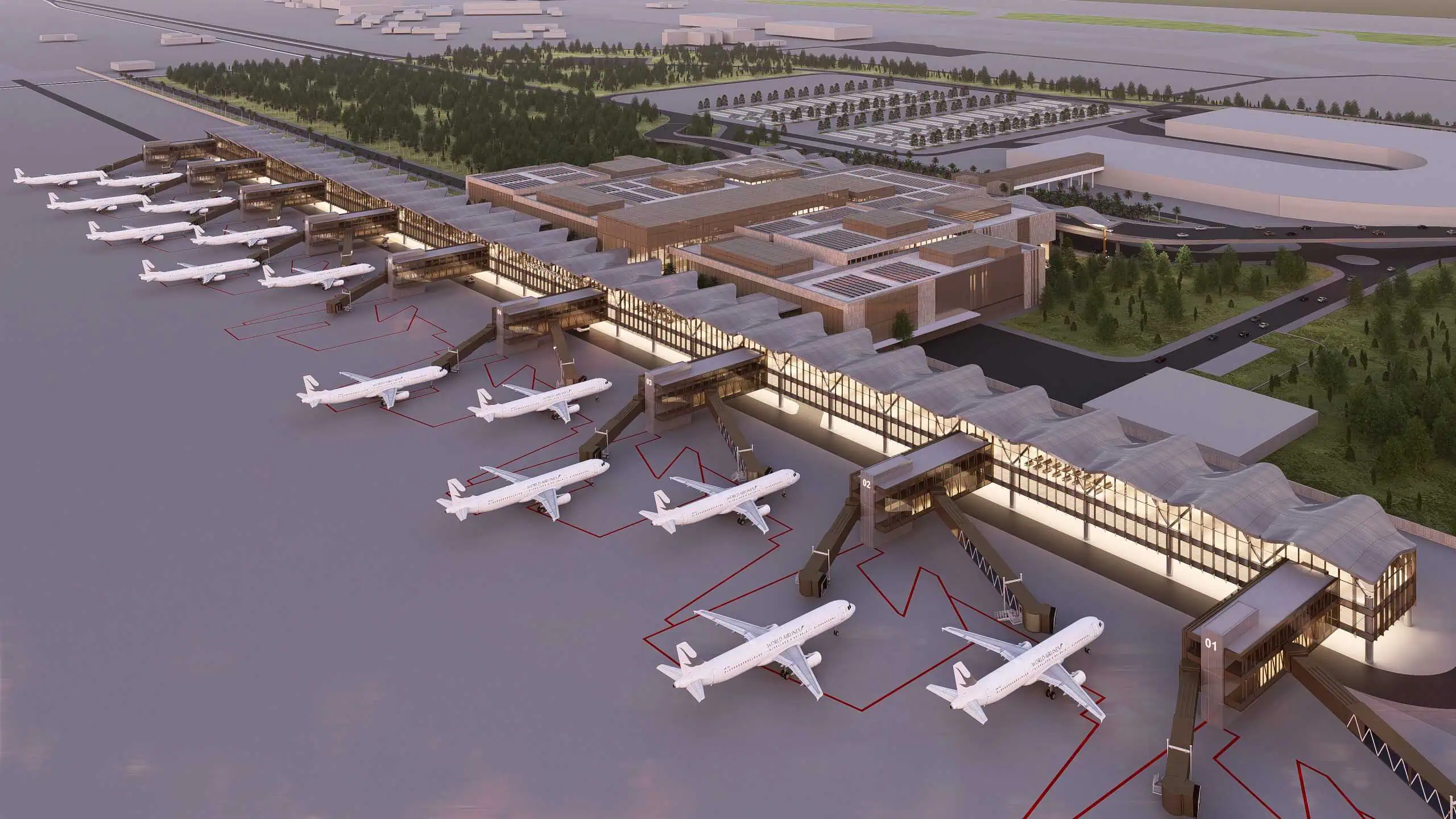
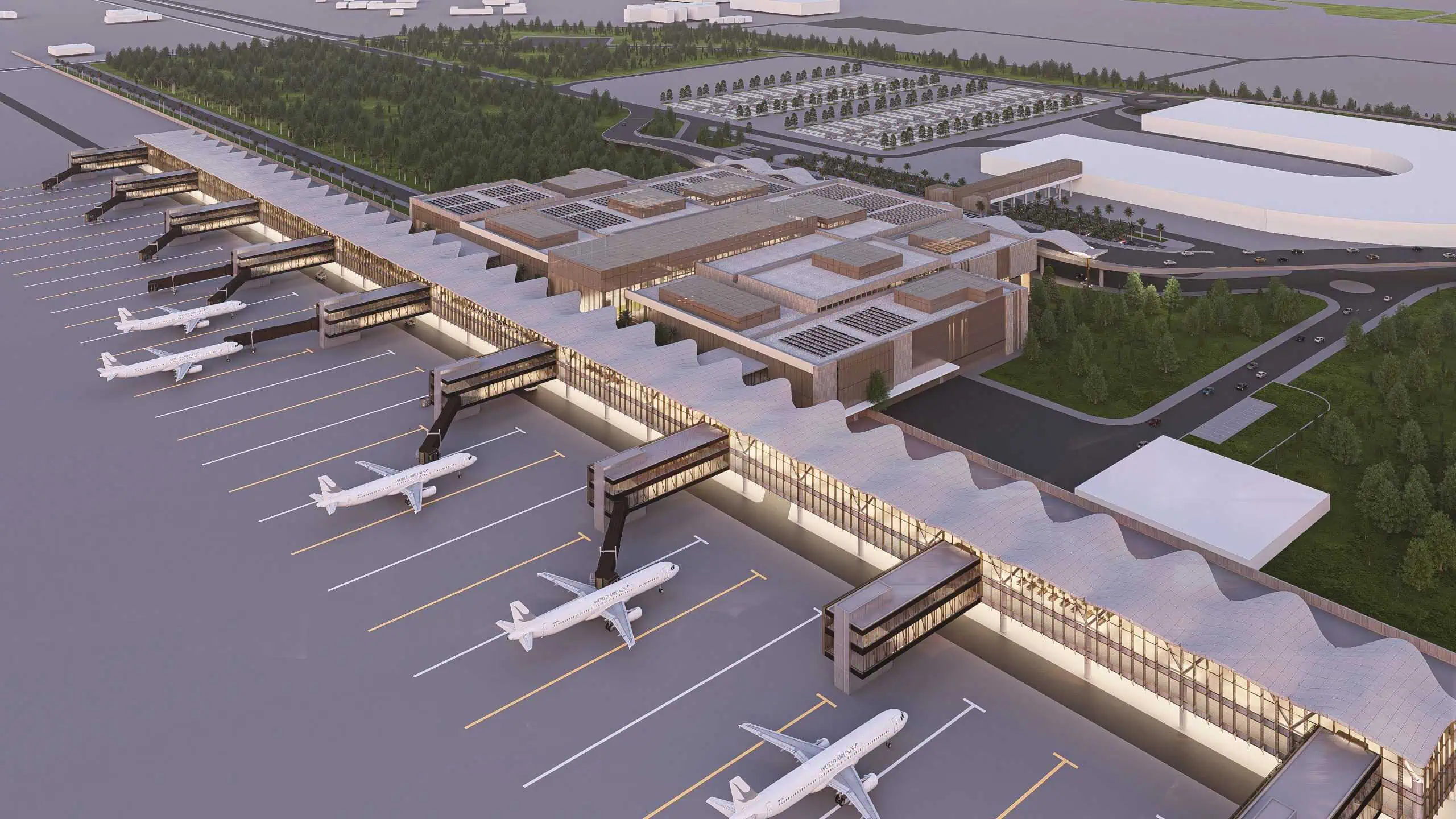
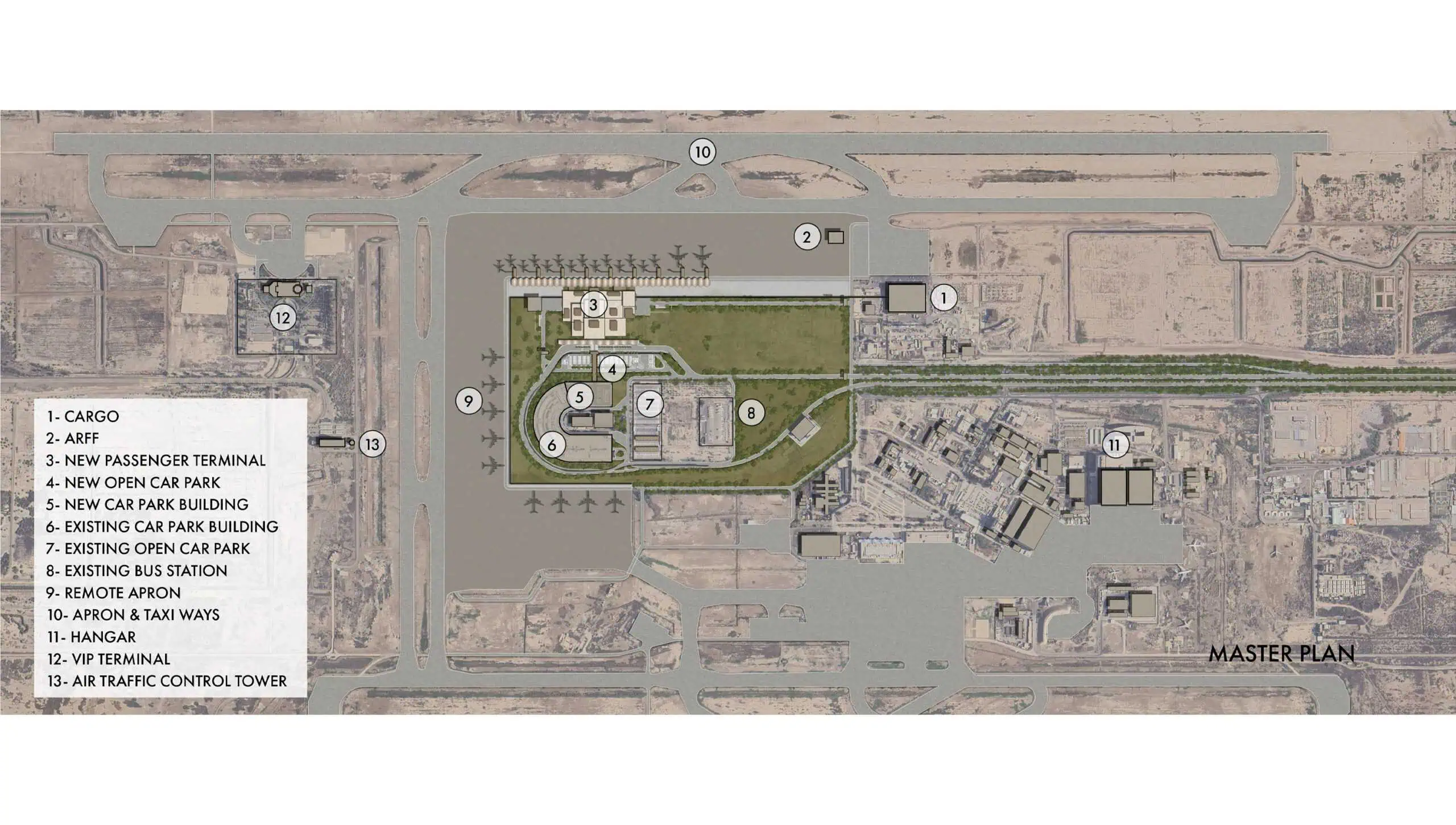
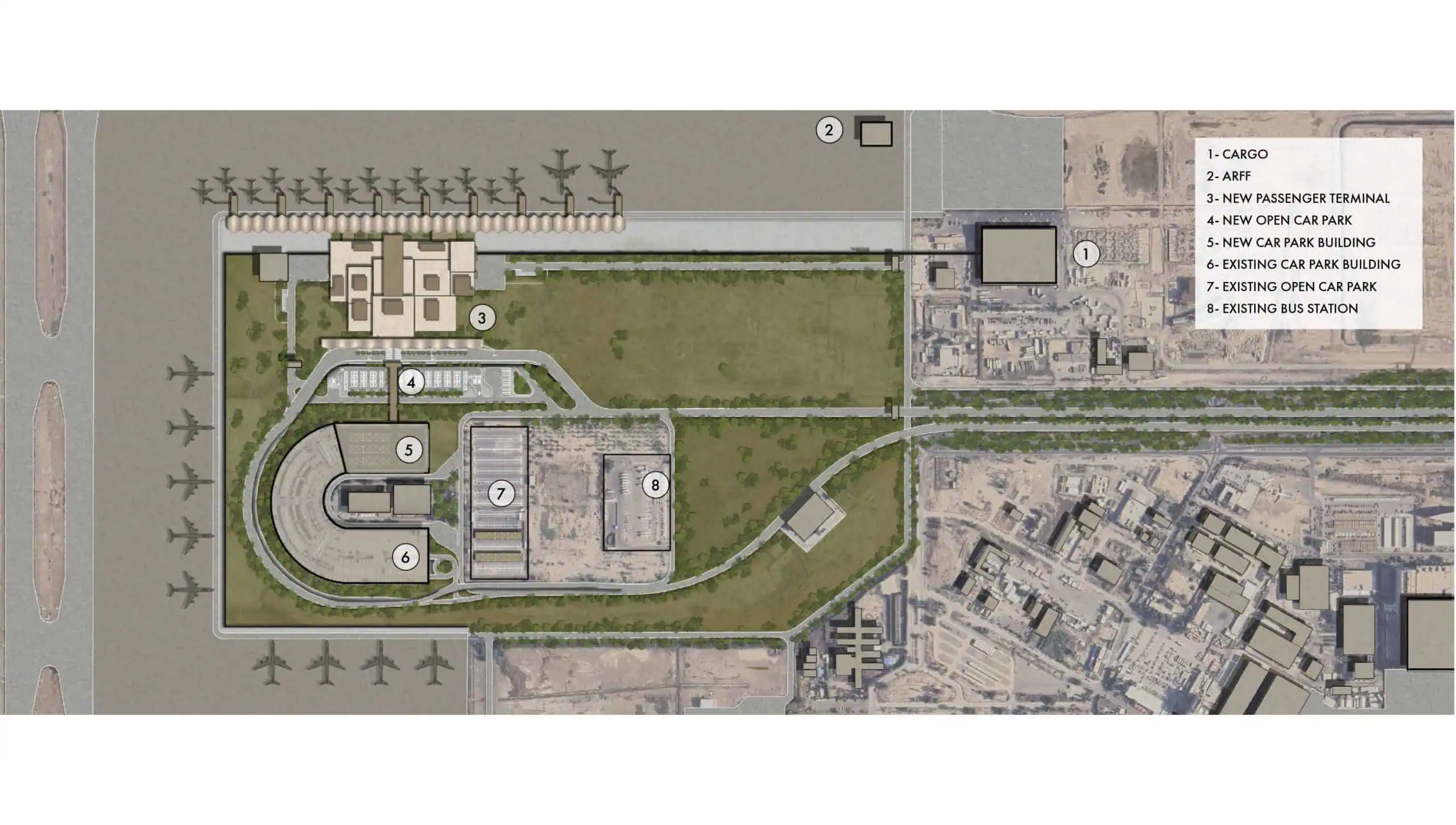
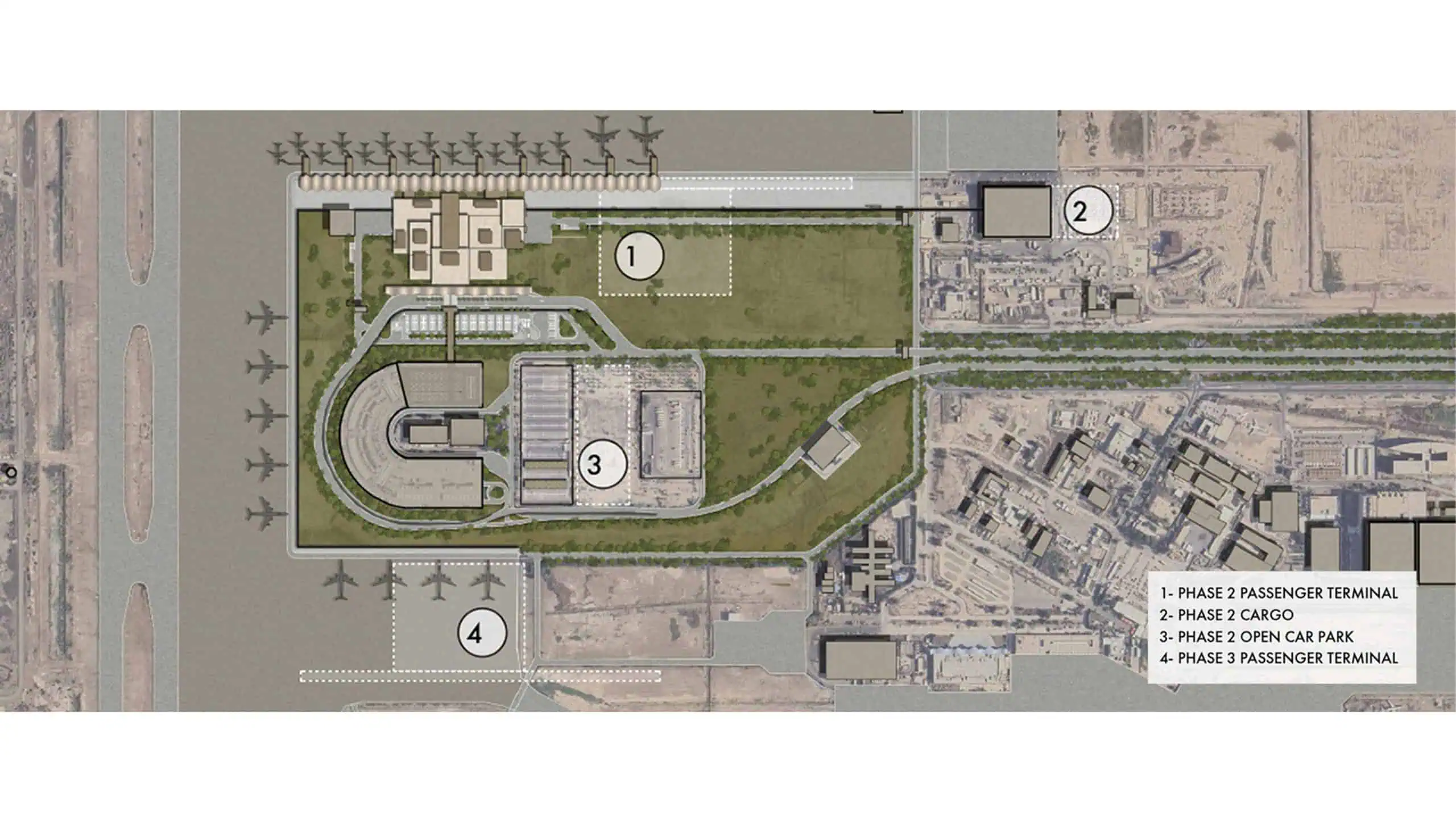
A phased masterplan integrates terminal development, airside operations, and landside access into a cohesive and expandable airport system.
Masterplan Strategy
The masterplan is conceived as a phased and scalable development framework that enables uninterrupted airport operations throughout construction and future expansion. Phase 1 introduces a new passenger terminal with an initial capacity of 8.5 million passengers per year, consolidating existing facilities into a clear and efficient operational core. Subsequent phases build upon this structure, allowing modular growth up to 16 million passengers annually while maintaining flexibility, operational continuity, and long-term adaptability.
The terminal façade expresses the continuity of interior spaces, translating the spatial sequence into a unified architectural identity.
Interpreting the Airport as a City
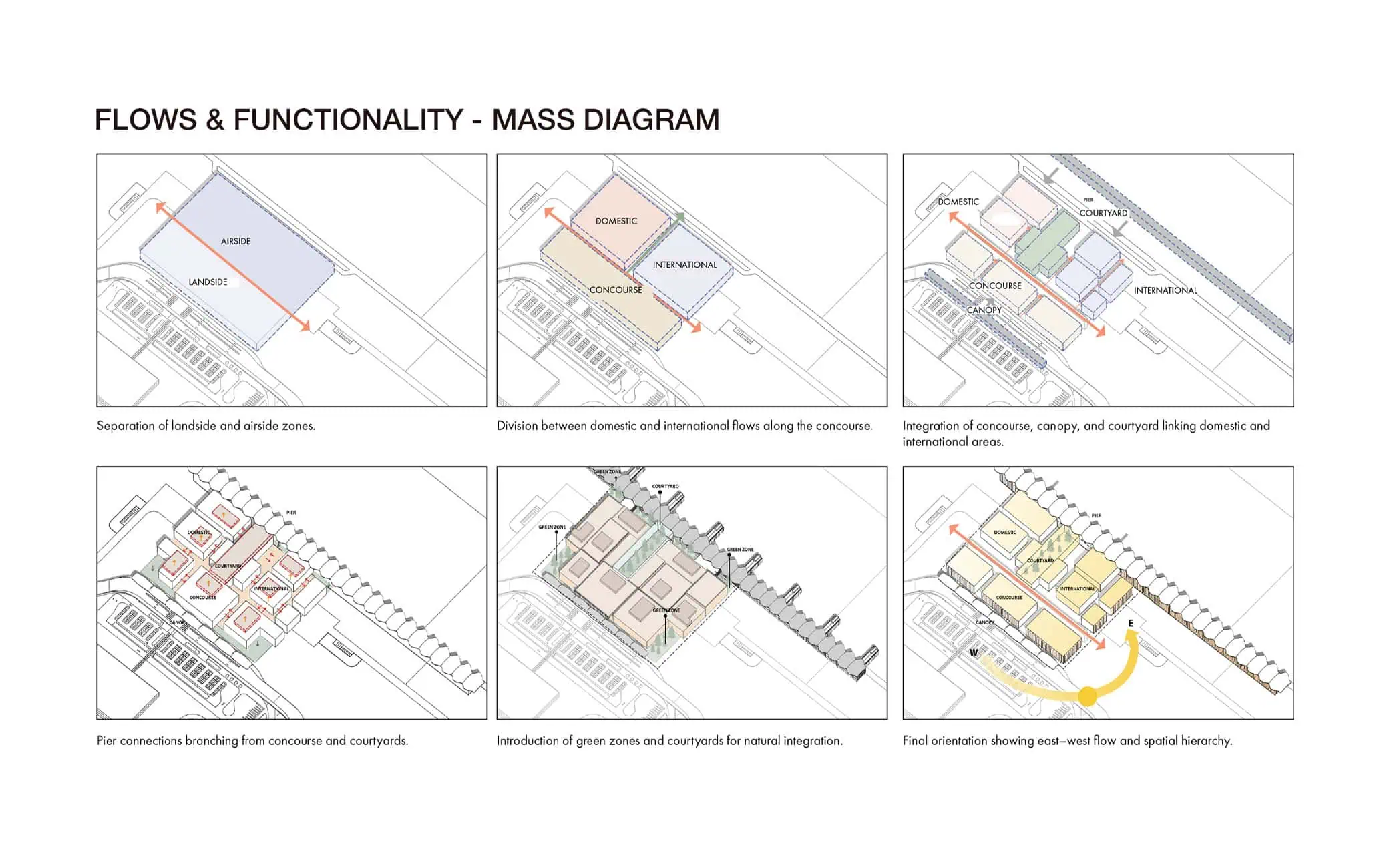
The architectural concept reinterprets the spatial logic of Baghdad’s urban fabric—its streets, courtyards, and shaded thresholds—into a contemporary terminal sequence. Instead of a singular monumental form, the terminal is conceived as a series of interconnected spaces that unfold gradually along the passenger journey. This spatial organization prioritizes clarity, orientation, and human scale, allowing movement from landside to airside to feel intuitive, calm, and legible at every stage.
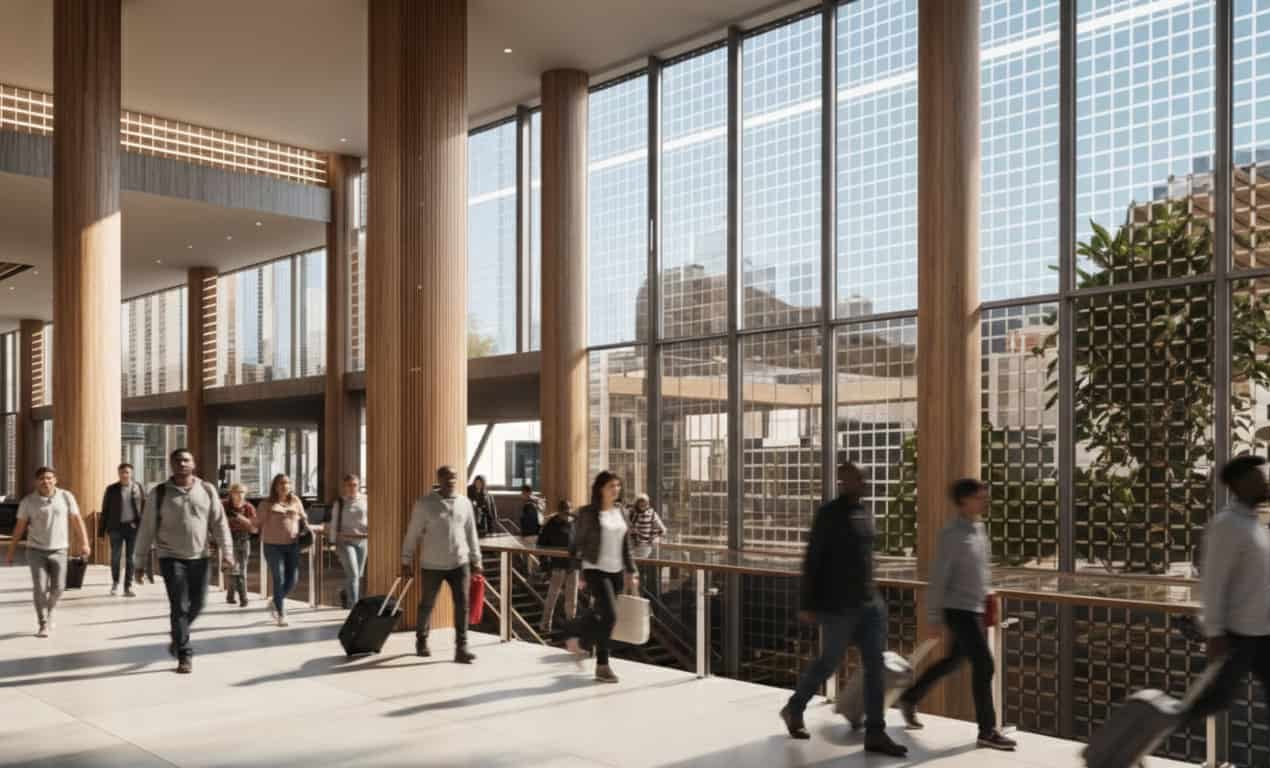
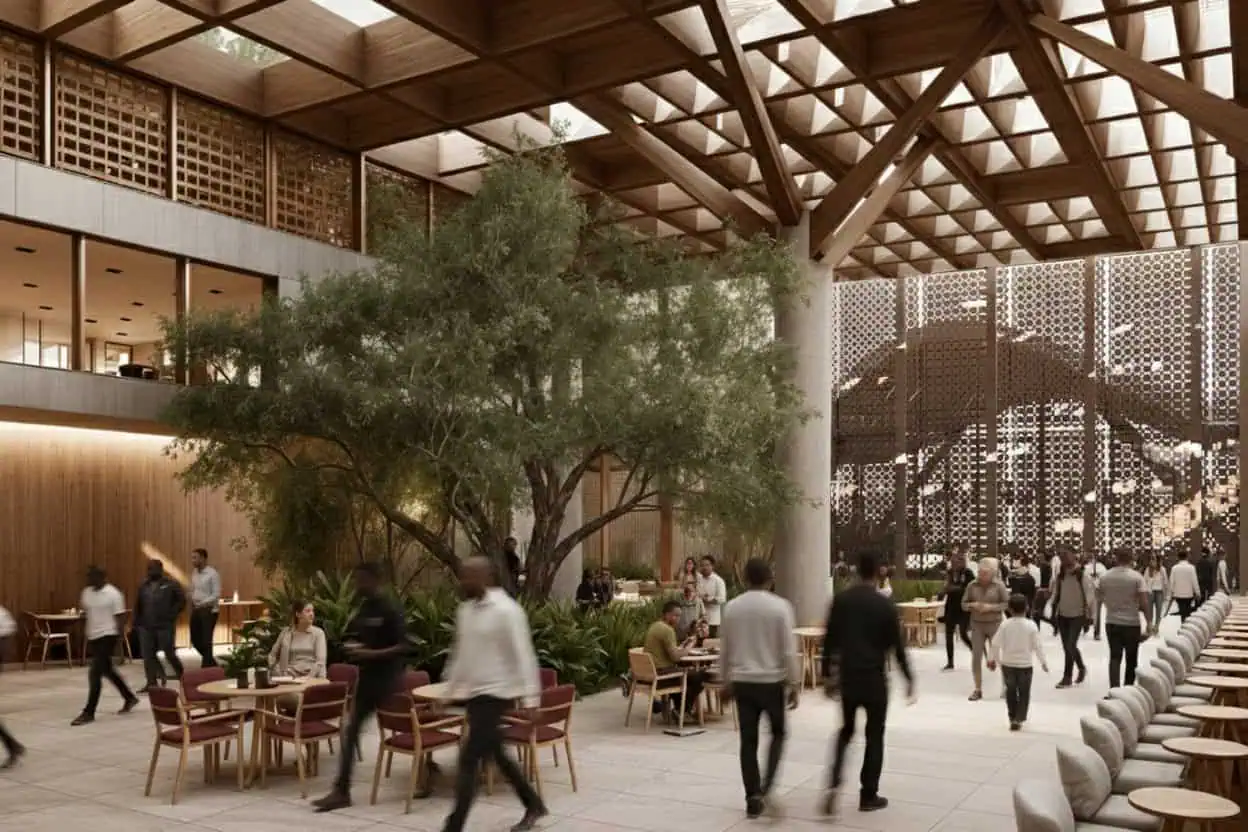
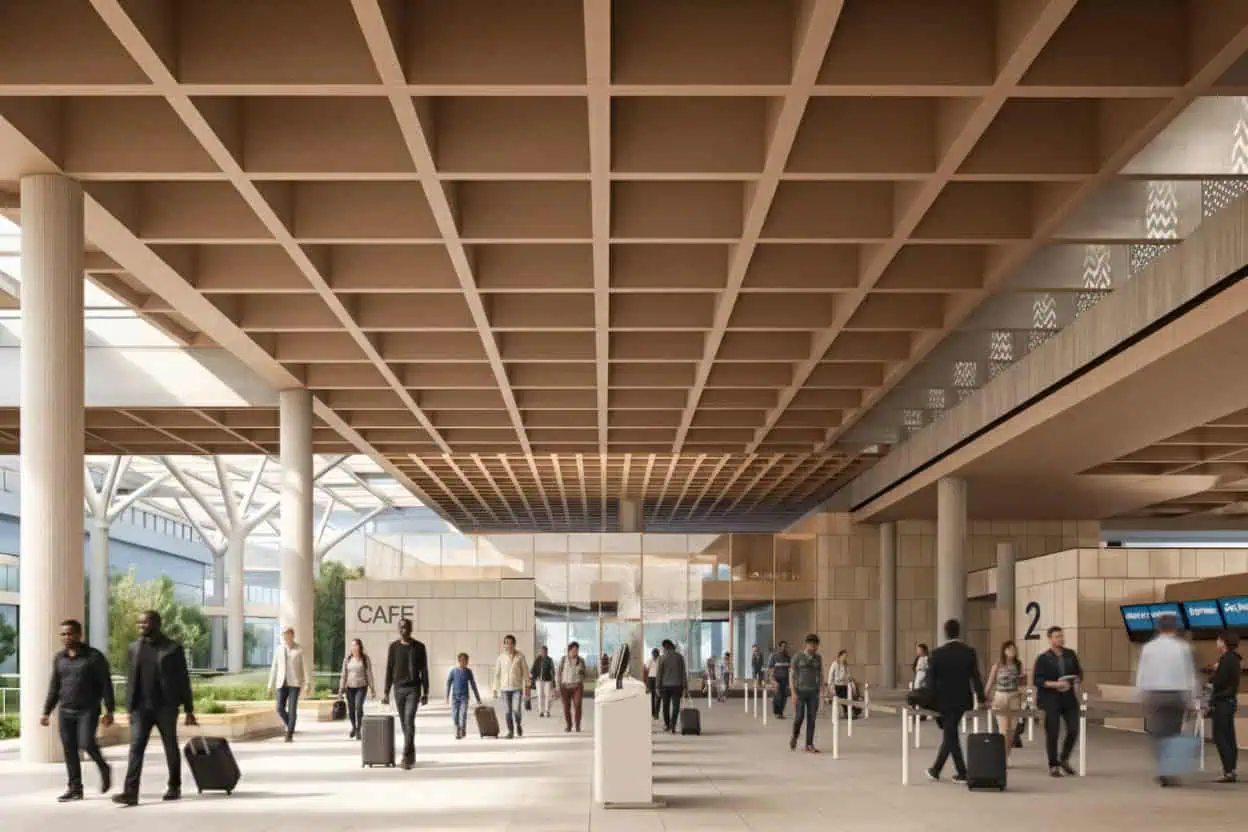
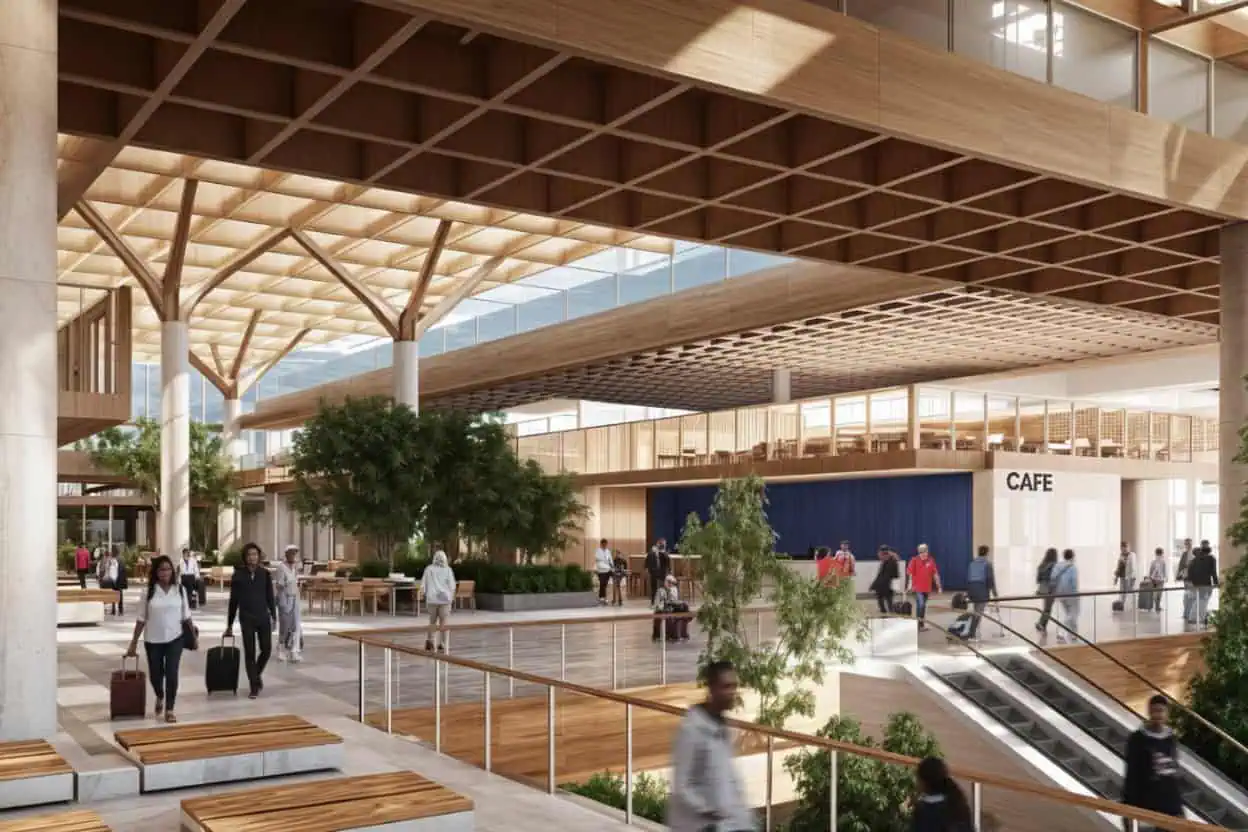
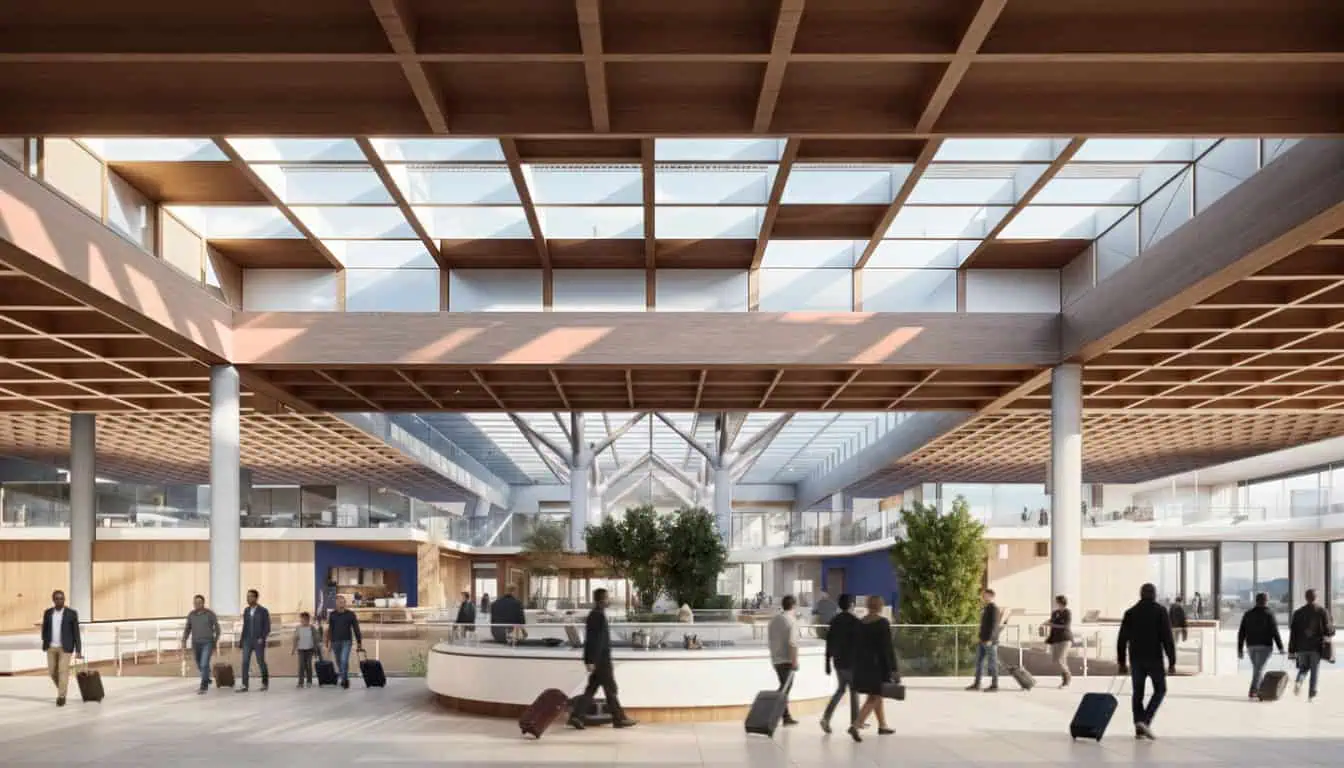
Filtered daylight, generous structural spacing, and visual openness define a calm and legible interior movement experience.
Designing Interior Comfort And Clarity
The interior of the terminal is organized around clarity, human scale, and spatial comfort. Courtyards, atriums, and filtered daylight structure the passenger journey, supporting intuitive wayfinding and reducing stress. Public spaces such as the check-in hall and departure lounges are conceived as open and legible environments, where structure, light, and materiality work together to create a calm and efficient travel experience rooted in the local context.
Luano International Airport