


Assos Eco-village and Arts School
Tucked between the rolling hills of Assos and the Aegean Sea, the Assos EcoVillage and Arts School reimagines rural life as a dialogue between agriculture, creativity, and community. Designed around ecological principles and local culture, it offers an immersive model for sustainable living and learning.


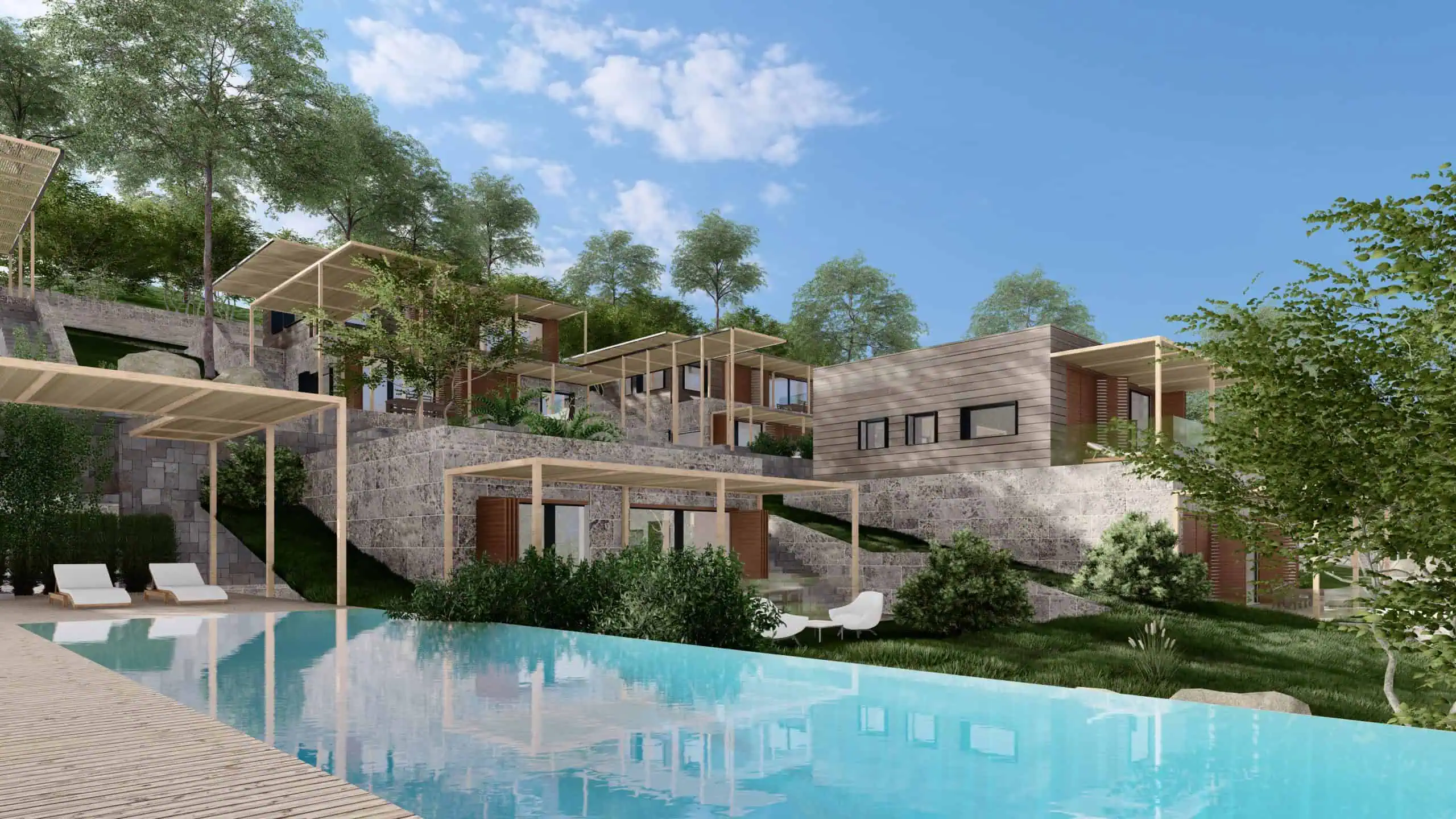


In a Land Where Time Moves Slowly, a New Pulse Emerges
Along the rugged coast of Assos, where olive trees lean into ancient breezes and the land rises gently from the sea, a new village begins to breathe into being. Not a village of necessity, but of intent: to live simply, create meaningfully, and belong deeply. The Assos EcoVillage and Arts School is more than a masterplan. It is a manifesto for living lightly — a place where farming, artistry, and sustainable community life are not separate ideas, but parts of the same organic whole.

A Village Designed by the Land, Not Against It
Rather than imposing grids and hard lines onto the landscape, the design follows the natural topography — embracing slope, light, wind, and view. Five distinct “neighborhood clusters” of homes are scattered across 66,000 m², each blending into the terrain with green roofs and earthen tones. 57 residential units offer three typologies — compact houses, family units, and mid-size dwellings, each with private gardens and shared courtyards. Social centers, one for each neighborhood, offer gathering spaces, kitchens, pools, and play areas — scaled for true community, not anonymity. Paths curve with the hills. Roads are few and slow. Nature is not pushed aside; it is folded into everyday life.


A Living Landscape: From Soil to Soul
Beyond the houses, the village flows outward into productive land: Olive groves, organic gardens and permaculture fields, small-scale livestock and poultry areas, a working farmhouse hub with agricultural offices, market shop, and storage. Water, food, and daily rhythms are imagined in cycles, not lines — where harvesting, cooking, sharing, and regenerating become one seamless loop. Rainwater harvesting, greywater recycling, and natural waste management systems are embedded into the village’s invisible infrastructure, supporting a model of circular living.
The Heart of Culture: The Arts School
The Assos Arts School is a living campus for creativity and exchange, with studios, a museum, guest houses, a restaurant, and an amphitheater rooted in the landscape. Its humble architecture uses stone, timber, and earth, with shade, breezeways, and terraces shaping spaces between gardens, olive groves, and light-filled walls. Here, art and agriculture meet as equals, creating a cultural heartbeat that unites community, nature, and craft.
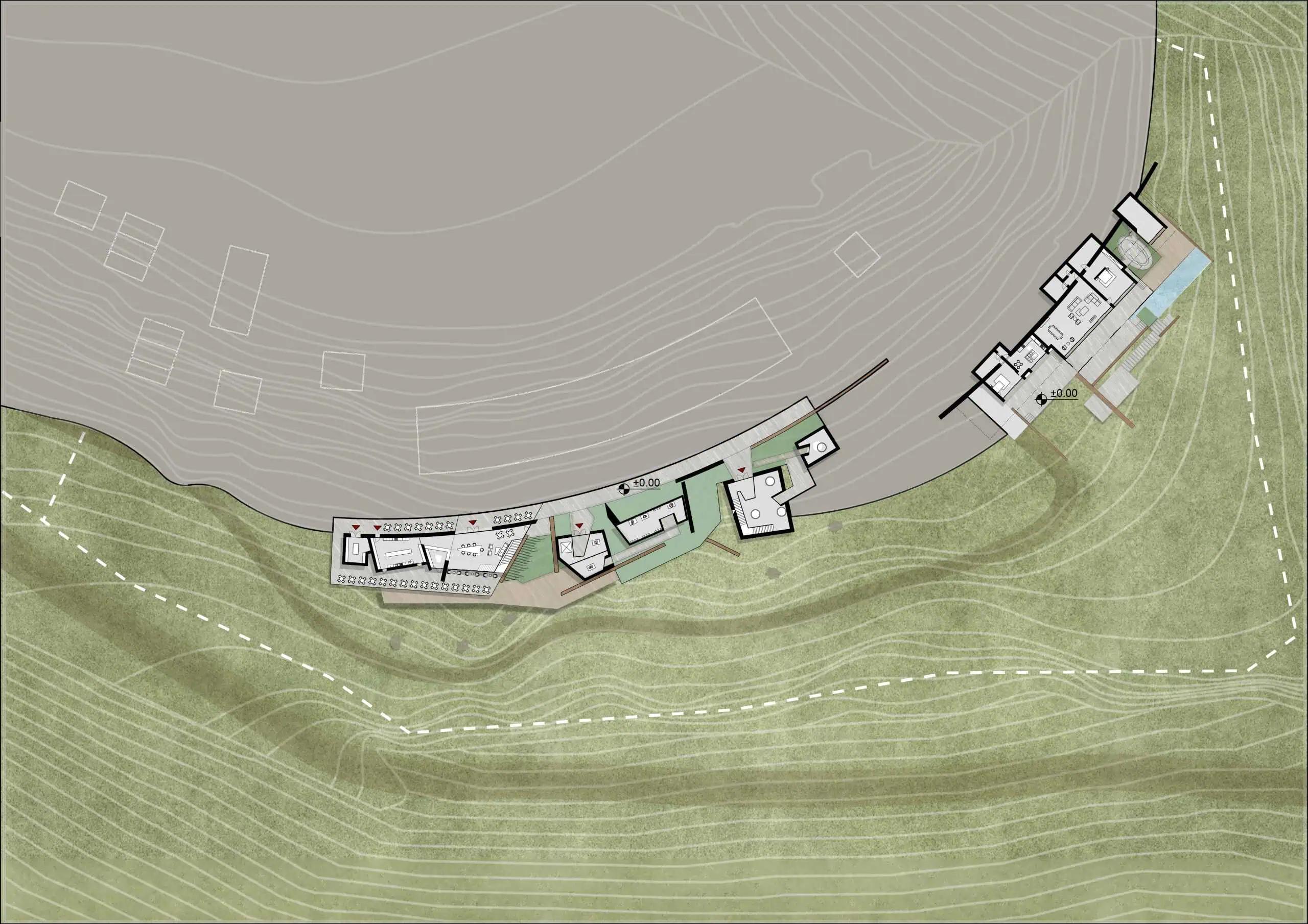


Sustainability Not as Feature, But as Framework
Guided by Avcı Architects’ 3E Philosophy and One Planet Living Principles, the project embraces carbon consciousness through passive cooling and low-impact materials, zero-waste systems with water recycling and composting, and sustainable mobility via walkable design and shared transport. It nurtures cultural vitality with spaces for learning and celebration, while supporting local economies through farm-to-table practices and workshops in self-sufficiency.

Designed for Change, Built for Continuity
Nothing here is static — the EcoVillage and Arts School are envisioned as living, modular systems. Homes can be adapted or expanded over time. Common spaces flex between uses, shifting to meet daily and seasonal needs. Agricultural production evolves with the rhythms of nature. Public programs grow with each generation, keeping the place adaptive, resilient, and rooted in its context.
Next project
King Road Jeddah Research & Envisioning Project
