


IZMIR RESIDENTIALS HALKAPINAR
Designed as part of a competition for a mixed-use residential development in Halkapınar, Izmir, this project redefines urban density through a balance of proportion, nature, and human scale. The master plan strategically positions high-rise towers and horizontal blocks to ensure unobstructed views of the sea and surrounding green spaces, anticipating potential future high-rise developments in adjacent parcels.


Design Approach
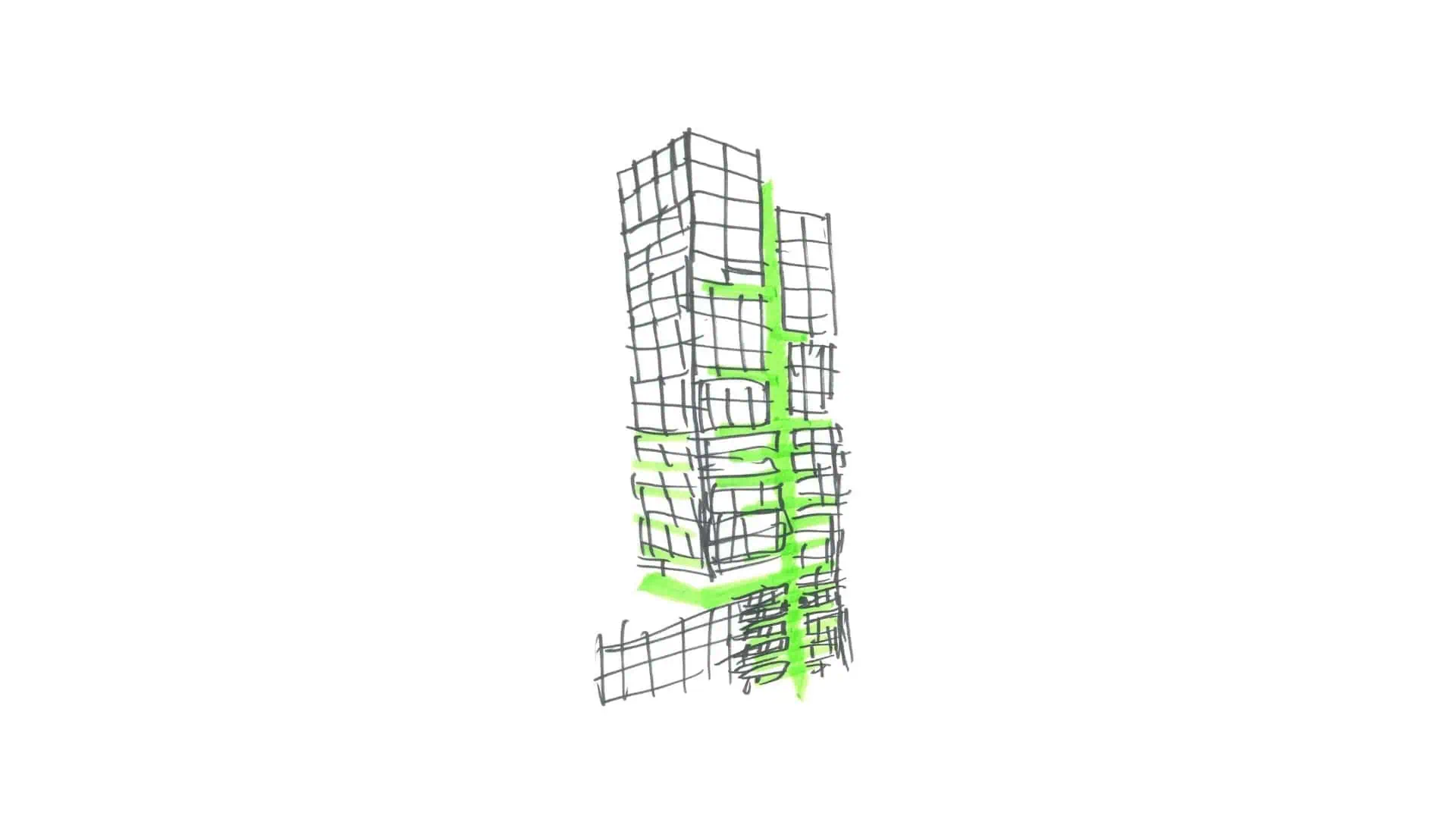
The mass configuration consists of:
- Two asymmetric towers, each rising 37 floors, maximizing landscape and sea views.
- Lower horizontal blocks, designed to extend greenery through courtyards and facades, creating a seamless connection between nature and living spaces.
At the core of the project, a continuous green zone connects courtyards, terraces, and façades, integrating nature into every level of development. This approach ensures:
- A dynamic, breathing façade, featuring wooden openings within a grid system to enhance natural ventilation and daylight access.
- A flexible façade modulation, balancing solid and transparent surfaces to optimize privacy, shading, and visual connectivity.
By merging architecture with landscape, the project creates a living environment that is adaptable, open, and environmentally conscious.
Climate-Responsive Design
The layout and massing of the development are guided by sun path analysis and site orientation, ensuring optimal light and shade balance throughout the year. Key strategies include:
- Shaded and well-lit spaces, created through strategic mass placement, preventing excessive heat gain.
- A central social facility and swimming pool, positioned in the least shaded area, maximizing sun exposure for recreational spaces.
- Canopies and shaded courtyards, designed to cool outdoor spaces, enhancing thermal comfort in Izmir’s warm climate.
Through thoughtful climate adaptation, this project establishes a sustainable, energy-efficient, and livable urban environment.
A New Benchmark for Residential Developments in Izmir
This project offers a forward-thinking approach to residential living, where architecture, sustainability, and urban integration create a dynamic and connected community. By prioritizing green spaces, passive design strategies, and flexible urban planning, it sets a new standard for sustainable development in Izmir.
Urban Access and Equity
The design also rethinks thresholds and accessibility:
- An elevated ground level is restructured to ensure visibility and access
- A new public platform lift bridges level differences between the street and main entrance
- Vehicular access is rerouted from Ayazağa Caddesi to Bilim Sokak, removing conflict zones
- Retail areas are made more accessible through strategic floor adjustments
This ensures that the building becomes not just open to the city, but also to everyone in it.
Material and Atmosphere: Istanbul Inside
The interior material palette reflects a language of soft modernism, grounding users in calmness and tactility. Across all spaces, the materials echo a theme: locality, honesty, elegance.
- Natural stones, satine stainless surfaces, and tactile wood panels
- Warm lighting designed to mimic natural daylight transitions
- Acoustic comfort prioritized through ceiling and wall treatments
- Office zones furnished with locally produced pieces from Nurus, Koleksiyon, Ersa
Each material decision carries a sense of Istanbul — crafted, layered, and respectful of complexity.
A Sustainable Upgrade with Lasting Value
Rather than a new build, this project exemplifies sustainable transformation by working within existing volumes and reducing embodied carbon. Added to that:
- Passive shading and daylight design improve energy efficiency
- Operable windows and ventilation strategies reduce HVAC dependency
- Energy-efficient lighting and water fixtures selected throughout
- Use of low-maintenance, durable materials for long-term resilience
This approach models an urban future where renovation is revolution.
Next project
Once Upon A Time
