UNDERSTANDING THE PANDEMIC – PARADIGM SHIFT
When I left Ljubljana, mily home city, a day before my birthday on February 24th, as the drama was unfolding in China, and heading in to Iran and then Italy, I left a note on the wall next to the entrance door to our apartment. It was a hurriedly scribbled, prescient of things to come and urgent,
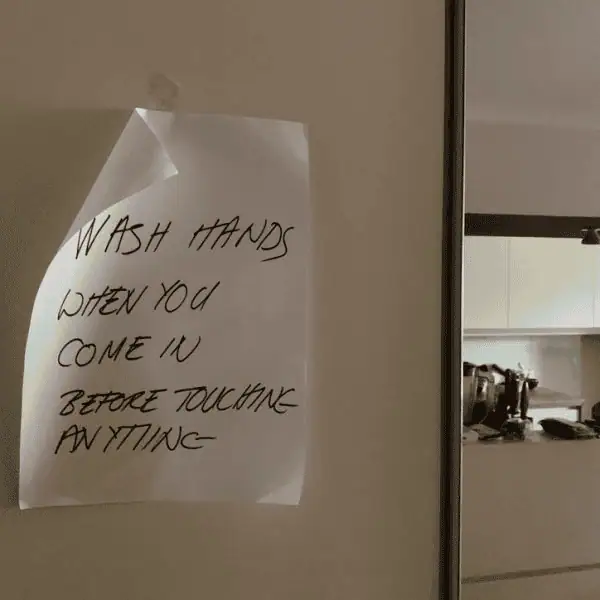
‘WASH YOUR HANDS WHEN YOU COME IN BEFORE TOUCHING ANYTHING”.
I last saw my daughter that day and my wife, on the 11th of March last when she left Istanbul to return to Ljubljana. Exactly a week later on the 18th of March on my return from my last business related travel to Congo, Brazzaville, all flights ground to a halt across the world. Our son returning from work experience in Japan, could only fly to Vienna, as we figured out how to bring him back half way across the globe, to our home base Ljubljana, and by the 20th of March our lives had settled in to what was to become a time of paradigm shift across the globe.
It has now been exactly 100 days that I have not seen my family. These events lived through in every family’s life in different ways will always be remembered as the 100 days that changed the World.
There has never been a time on the planet where every human being became part of one single event, focusing on one thing, living through one common time unit, experiencing collectively a reset of a kind that melted away any sense of ‘normal’ time as weekdays melded in to weekends and we all found ourselves with time on our hands that previously we would have only dreamt of.
As we try to look forward to attempt to predict what the future holds, we are all living in that moment again together, globally, thinking the same one thought: ‘How are we going to get back to our lives again?’
To try to answer that question from primarily a professional position, but with the perspective of personal experiences, we agreed that we should prepare a compilation of thoughts, composed of viewpoints from across the globe and publish this document for all of us to try to see a way forward to the future, to our new lives.
Selçuk Avcı 17 June 2020
Understanding
the pandemic
The Paradigm Shift
Enough time has passed now to make some clear statements about the nature of what the virus is and how we can protect ourselves from it
At Avcı Architects we work across many sectors, and many building typologies come across our desks during the course of a typical year. The way in which our life needs to change and the way in which we need to adapt the design to suit this new reality is as divergent as the types of building that there are. But one thing that is common to all these problems is the singular characteristics of how a viral infection moves through physical space and through human beings.
More than anyone else apart from the medical profession, we as architects are probably the most responsible in defining the way we should behave in our spaces and how spaces should respond to this new factor in our lives and as architects, we need to understand it the most so that we can help you to navigate the future both safely and creatively.
Thanks to the internet most of us have all been through a great education about the nature of this pandemic, and the effects it has on our health and wellbeing. Enough time has passed now to make some clear statements about the nature of what the virus is and how we can protect ourselves from it, and other similar illnesses. I say similar because yes, we do have other risks still around all of us that are although less dangerous in many ways, but which still should affect our way of thinking about health and wellbeing. I have always been vociferous about the need for a rigorous approach to hygiene in the workplace and never considered it acceptable to come to the office knowingly when one is unwell. Alas, many people prior to this would have come to the office with a cold or flu, well aware that they are likely to pass it on to others, but feeling for some reason obliged or the need to be there. The loss of time and also at times lives that this caused was not impactful enough then to make the needed change. But C-19 has achieved that change in three short months and we as a practice hope that this time it is a permanent change.
One truth is that a virus of this kind, like all similar versions, is unlikely to ever ‘go away’ fully until a vaccine regime contains it. As this highly informative TED-Ed video shows, this will happen but it will mutate over the years and countries will variously play a cat and mouse game of inventing and reinventing vaccines to contain it. Since it is going to remain with us for a while and the risk to our lives and more specifically to the lives of our loved ones who are older and those more vulnerable will remain, we will always have to have new measures in our lives.
“The measure of intelligence is the ability to change.”
Einstein
Once the level of spread has been contained, moving around the virus will be easier but in this worst-case scenario of continuing volatility in its mutation and movement, we have to change our environment to suit the new life.
Given that it is here to stay awhile we need to understand it as much as we can. There have been numerous research-based articles published on how it behaves and what we need to do to protect ourselves, and I think it is essential that all of us study it at least to this level in order to not waste precious time on unnecessary measures but to concentrate on what is relevant and what is possible.
How we behave?
But how we behave is affected by always the same characteristics of spread and it is worth understanding how this happens.
As we try to break loose from the lockdowns globally all of us are trying to understand how we should behave in our workplaces. By workplace we mean of course all forms of work. Being in the office is one but a restaurant is also a place of work, so is a concert hall or a conference centre. But how we behave is affected by always the same characteristics of spread and it is worth understanding how this happens because only if we understand it will we be able to deliver solutions and approaches that everyone can engage with.
The transmission of the virus happens through two mediums. Particles present in the atmosphere that we breathe, and what we also transfer to our face through touch. The movement of particles through the air will enter our system in one of two ways: the respiratory system and eyes, and of course any open wounds that come in to contact with infection. But it is touch that is the most unpredictable and requires tough measures to contain.
The World Economic Forum (WEF) has been publishing articles regularly on the subject of mechanisms of spread which are very useful, where the reports show specific case studies in situations. The simple conclusion of this report is that in indoor public situations air movement in the space is what defines the outcome.
Research carried out by a science institute in Japan, illustrated this mechanism experimentally in controlled conditions. There is hardly anything surprising about the findings of this research but it is helpful to understand what is going on visually when setting out to design systems in internal environments.
SARS-CoV-2 Coronavirus Micro-droplets – NHK World report, Japanese research
What is causing more anxiety and confusion than perhaps it should is the idea of spread in outdoor environments where many people are now seen to be wearing masks, even while going about outdoor sporting activities. The critical issue here is the level of the infectious dose that is required to cause an infection. It is true that sneeze droplets can travel between 3-5 meters in an outdoor environment, but whether or not this will deliver an infectious dose sufficient to cause infection is not necessarily the case. It is estimated that the level of infectious dose required is between 900 to 1500 particles, and although it is possible to deliver that kind of level in a closeup sneeze, it is unlikely that this will be the case when you are at a relatively safe distance from an infected person.
“It is estimated that the level of infectious dose required is between 900 to 1500 particles”
Why you’re unlikely to get the coronavirus from runners or cyclists, www.vox.com
Clearly the issue is the degree and grade of risk we individually are prepared to live with. This news report on masks not only clarifies the issue of masks or no masks, but also sheds some light on myths such as the effect of 5G.